

01/30/2026 3:20 a.m.
https://cablematic.com/en/products/20v-40a-battery-grinder-kit-koma-tools-08760-KM205/
https://cablematic.com/en/products/20v-40a-battery-grinder-kit-koma-tools-08760-KM205/





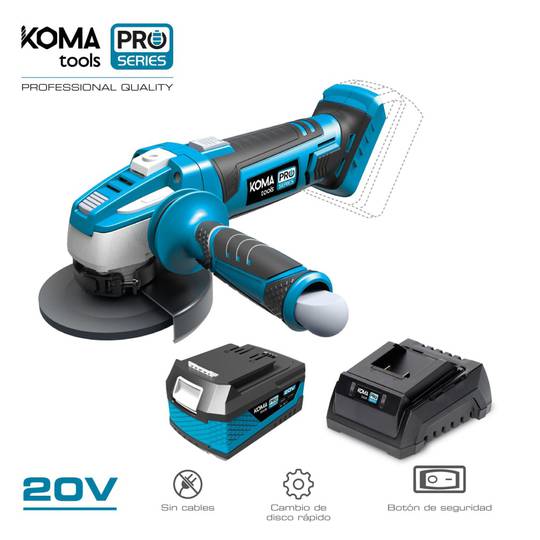
20V 4.0A Battery Grinder Kit KOMA Tools 08760
20V 4.0A Battery Grinder Kit KOMA Tools 08760
REF: KM205



Specifications
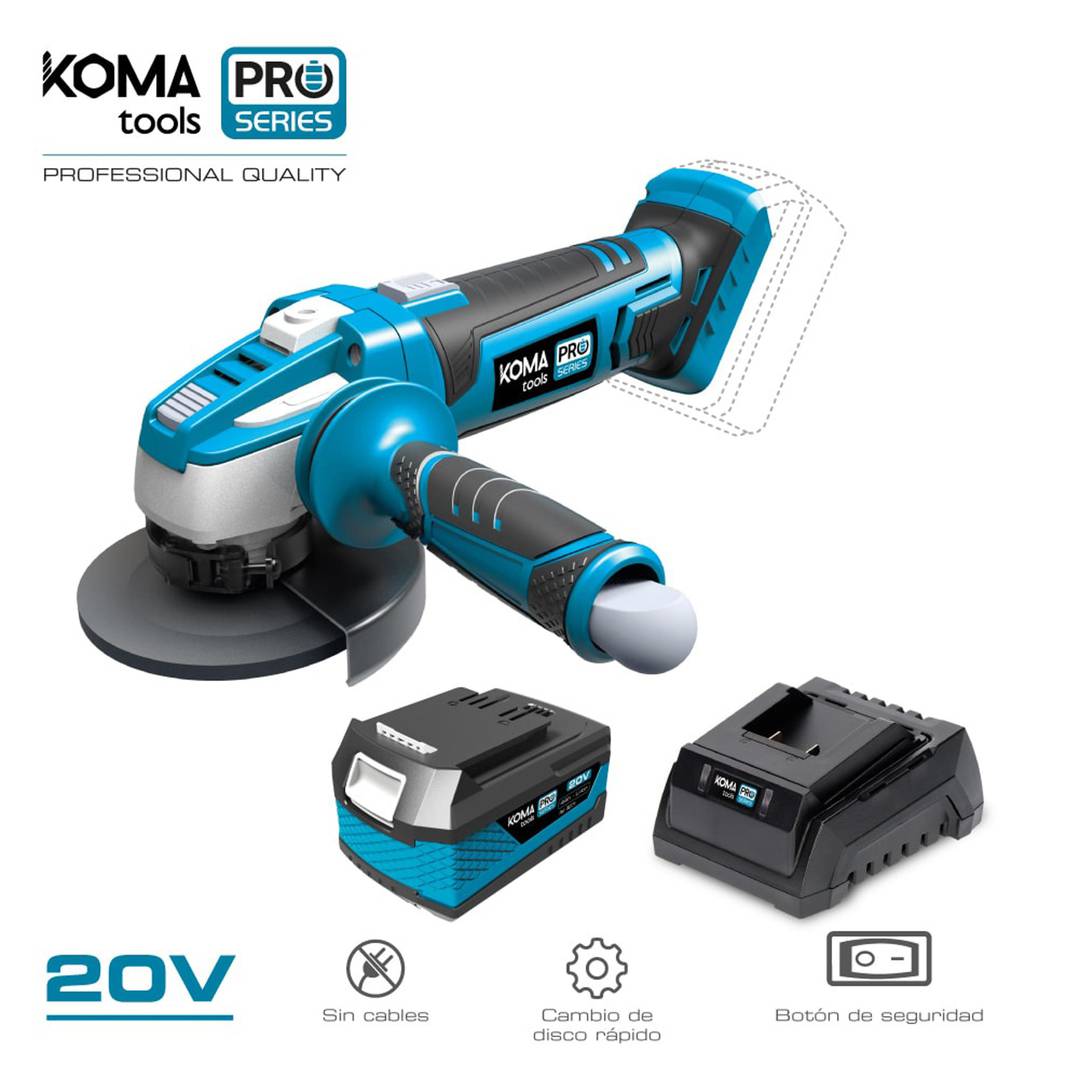
- Power 20V
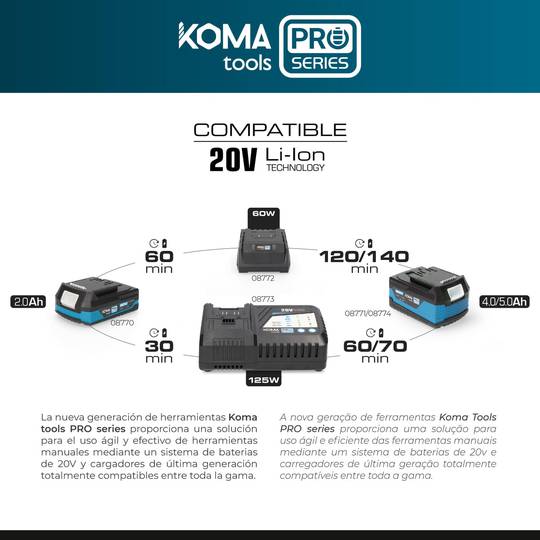
- Includes 1 4.0A battery and 60W charger.
- Speed 9500rpm.
- Security switch.
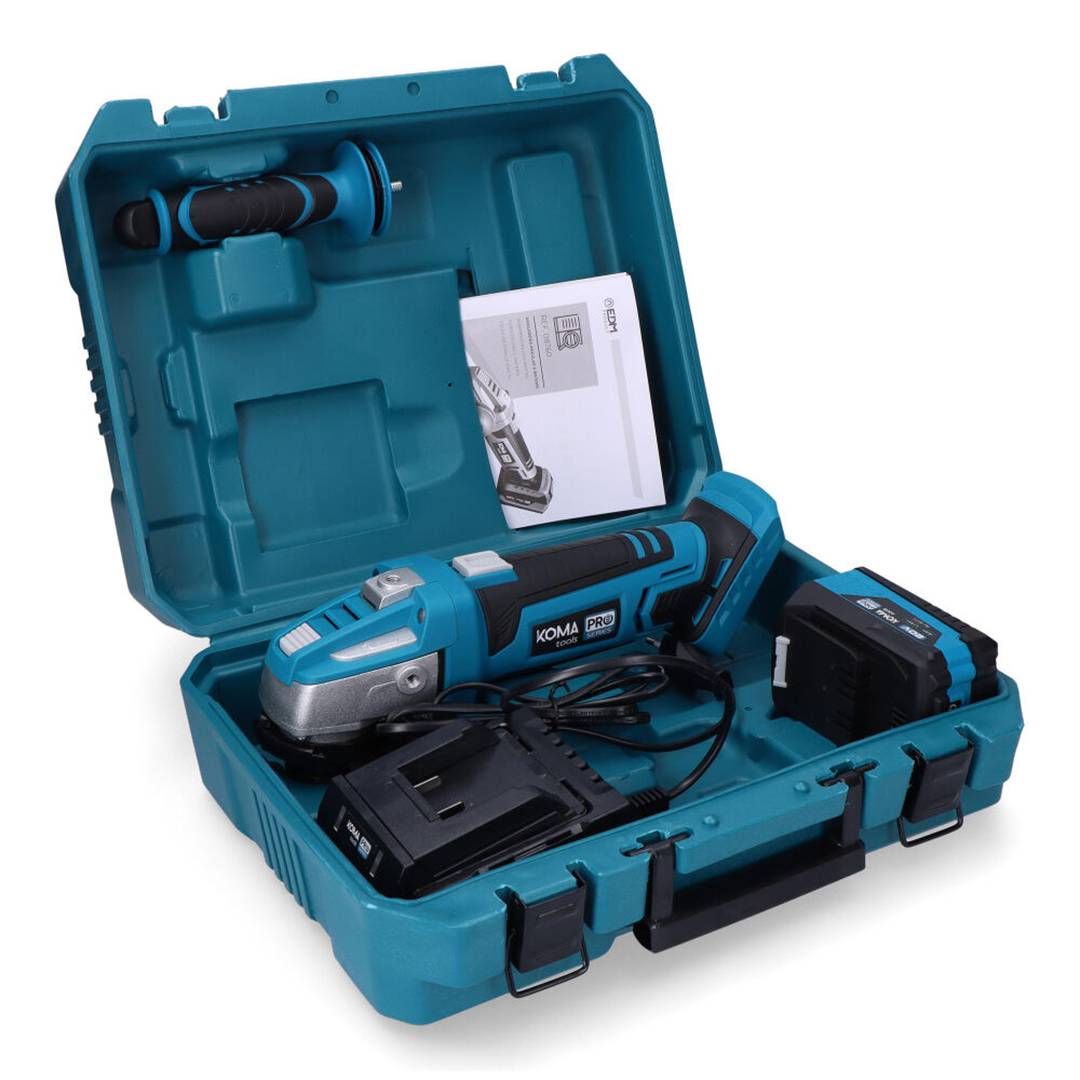
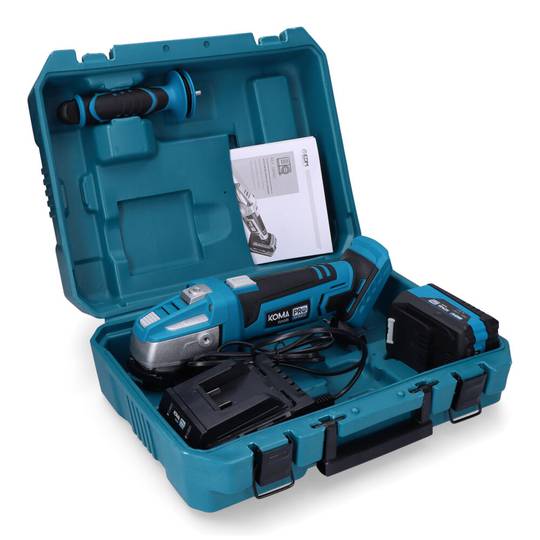
- Presentation in transport case.
PVP
€123.29
Price including VAT:
€123.29
PVD
€119.01
PVP: Retail price.
Check conditions.
PVP: Sale price to distributors.
Check conditions.
 2 years
warranty
 14 days
returns
 100%
100%safe
We will notify you when it is back in stock.
Specifications
- Power 20V
- Includes 1 4.0A battery and 60W charger.
- Speed 9500rpm.
- Security switch.
- Presentation in transport case.
Related products


Keywords
Did not find what you were looking for? These topic could help you
More info
The 9500rpm speed is ideal for working with 115mm diameter discs (not included). It is equipped with a safety switch to ensure safe use. This grinder comes with a 4.0A battery, a 60W charger, and an extra handle for convenience. For optimal operation, it is recommended to use the reference 08772 battery. In addition, it includes a key to change the disc and it is presented in a practical transport case. Manufactured by KOMA Tools with reference 08760.
Specifications
- Power 20V
- Includes 1 4.0A battery and 60W charger.
- Speed 9500rpm.
- Security switch.
- Presentation in transport case.
- Gross Weight: 4.402 kg
- Number of packages: 1
Technical terms
- Battery charging cycles
Battery charging cycles
When calculating the life of a battery it will be necessary to know the number of charge cycles that can be performed until the battery does not begin to lose its capacity.
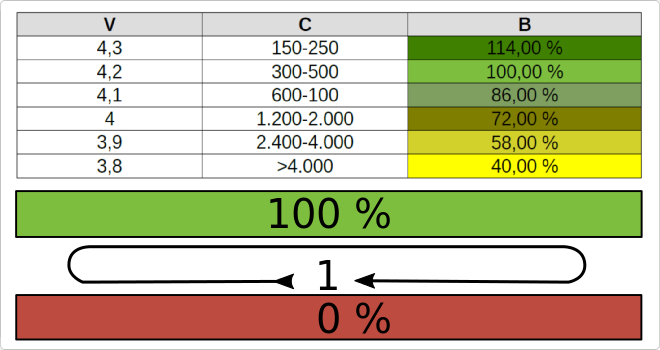
Depending on the type of battery these charging cycles can vary, the most common being the mobile batteries, manufactured Li-Ion or Li-Po, which have a duration of between 300 and 500 charging cycles according to model and manufacturer.
Once thisE limit we will notice how the battery loses duration of operation, arriving to lose up to 25% of its capacity of load.
At this point it will be necessary to evaluate a battery change.
It should be noted that usage and charging habits can significantly affect battery life. For example, factors such as heat, charge the battery several times a day without it is almost exhausted, etc. Will be affectedits duration.
Therefore, to get the most out of the battery we must know when a full charge cycle is performed, and try to avoid misuse of charge, to increase its useful life.
A charging cycle is considered when the battery has been discharged or its 100% charge has been used.
The manufacturers advise that the charge is never made below the 58% battery, since the battery voltage would not fall so lowTo, so you could end up winning up to 4000 charge cycles.
Tips to increase the life of a battery.
Depending on the type of battery these charging cycles can vary, the most common being the mobile batteries, manufactured Li-Ion or Li-Po, which have a duration of between 300 and 500 charging cycles according to model and manufacturer.
Once thisE limit we will notice how the battery loses duration of operation, arriving to lose up to 25% of its capacity of load.
At this point it will be necessary to evaluate a battery change.
It should be noted that usage and charging habits can significantly affect battery life. For example, factors such as heat, charge the battery several times a day without it is almost exhausted, etc. Will be affectedits duration.
Therefore, to get the most out of the battery we must know when a full charge cycle is performed, and try to avoid misuse of charge, to increase its useful life.
A charging cycle is considered when the battery has been discharged or its 100% charge has been used.
The manufacturers advise that the charge is never made below the 58% battery, since the battery voltage would not fall so lowTo, so you could end up winning up to 4000 charge cycles.
Tips to increase the life of a battery.
- Avoid extreme heat or cold or very long applications of the device.
- Charge the battery as often as you can.
- Fully discharge the battery from time to time.
- Do not let the battery run out completely before charging.