

https://cablematic.com/en/products/4-port-sdi-repeater-multiplier-hd-sdi-sd-sdi-3g-sdi-newbridge-DI012/
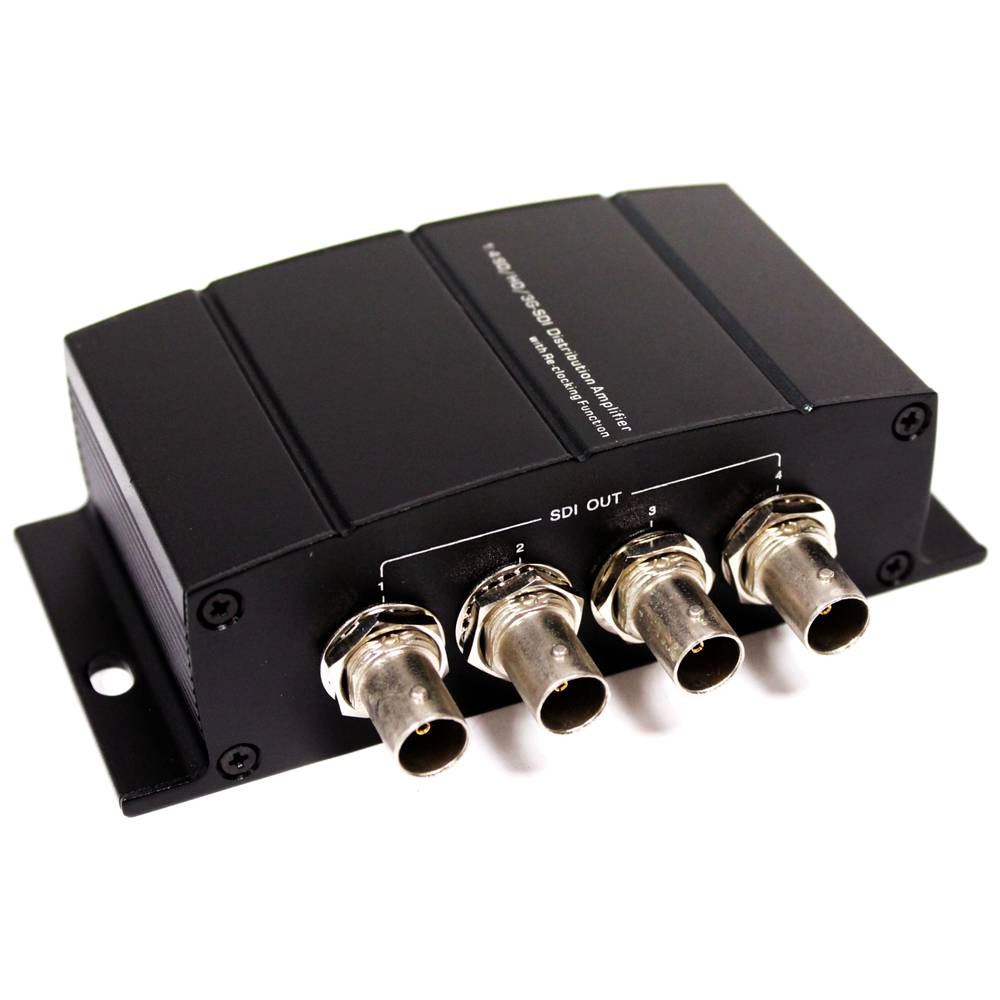
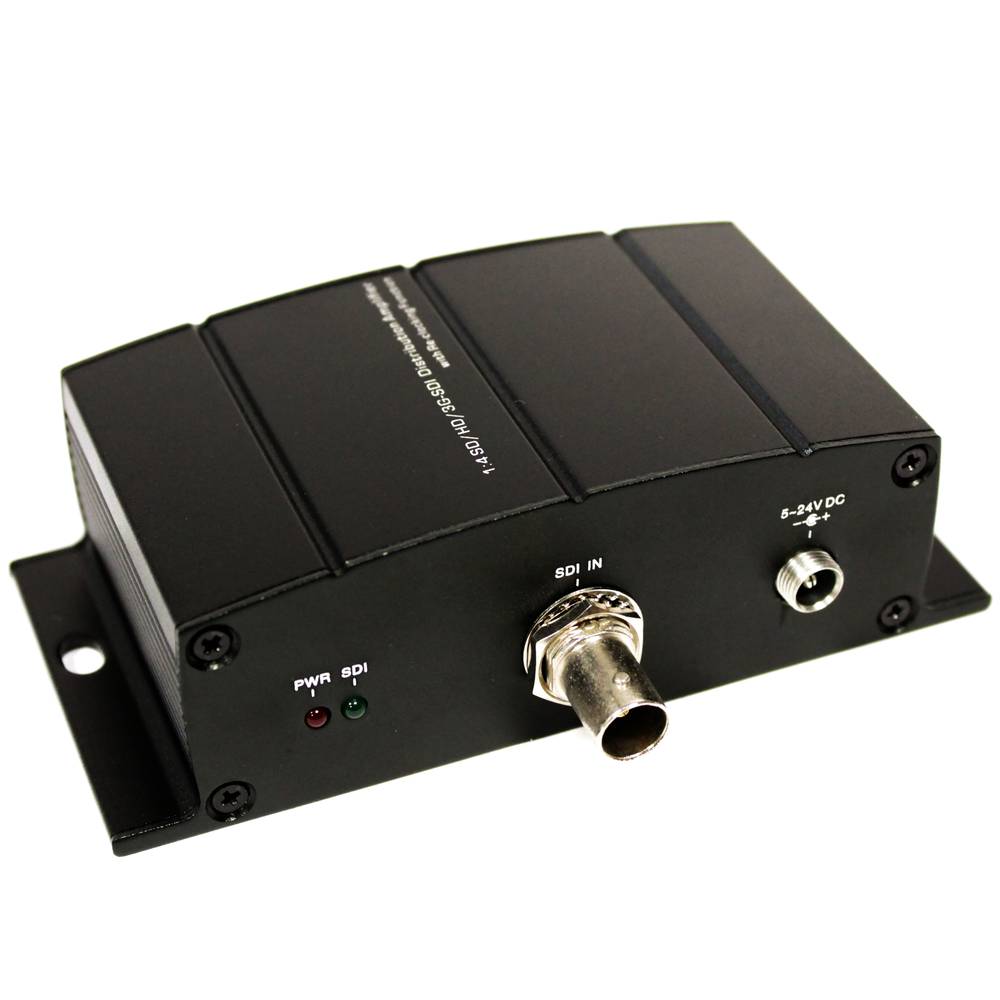




4-port SDI Repeater Multiplier HD-SDI SD-SDI 3G-SDI NewBridge

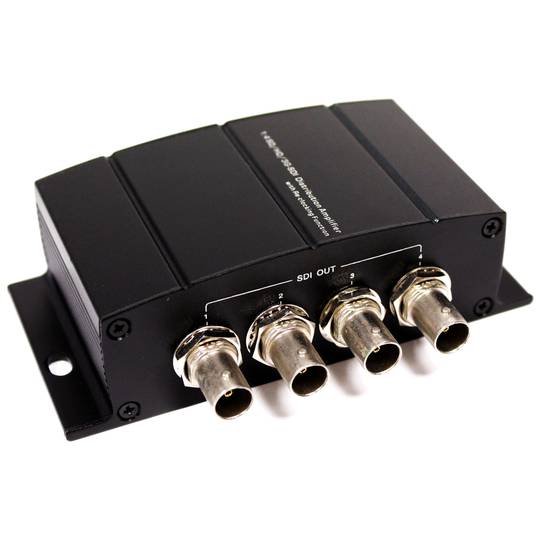
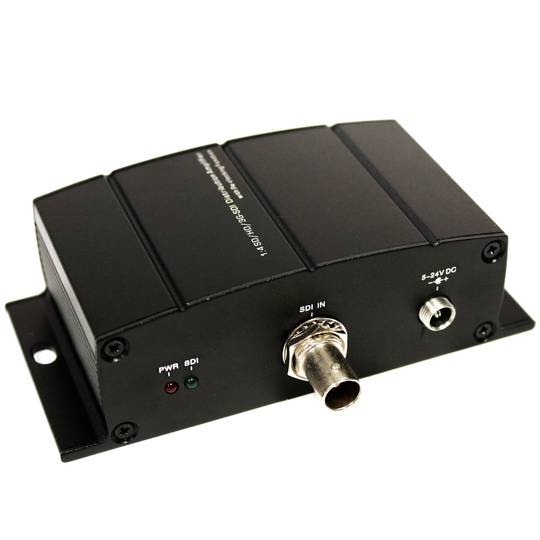
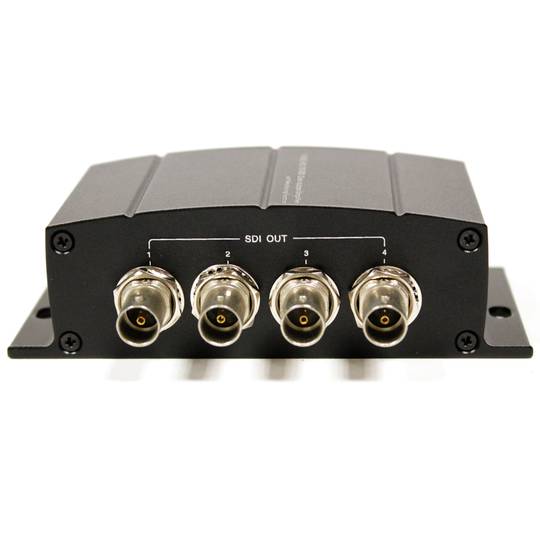

- Standard SDI supported: HD-SDI, SD-SDI and 3G-SDI.
- Frequencydata: 270Mbps/1,485 Gbps/2.97 Gbps.
- Signal type: SMPTE 292M, SMPTE 259M.
- Four independent outputs and with its own buffer.
- Equalization and resynchronization of the input signal.
![play_button]() Watch video
Watch video
More info
 Watch video
 2 years
warranty
 14 days
returns
- Standard SDI supported: HD-SDI, SD-SDI and 3G-SDI.
- Frequencydata: 270Mbps/1,485 Gbps/2.97 Gbps.
- Signal type: SMPTE 292M, SMPTE 259M.
- Four independent outputs and with its own buffer.
- Equalization and resynchronization of the input signal.
More info
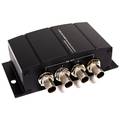
SDI 4-port multiplier. Repeater, amplifier and distributor of high definition SDI video. It receives SDI signal and multiplies it perfectly and retransmits it to the output ports. The device performs a re-clock and equalization of the input signal to supply the same outputs, and with the same quality.
Specifications
- Standard SDI supported: HD-SDI, SD-SDI and 3G-SDI.
- Frequencydata: 270Mbps/1,485 Gbps/2.97 Gbps.
- Signal type: SMPTE 292M, SMPTE 259M.
- Four independent outputs and with its own buffer.
- Equalization and resynchronization of the input signal.
- Re-clock function that allows the interconnection in chain of several similar multipliers.
- Maximum cable length (Belden 1694A): 400m (SD-SDI), 200m (HD-SDI), 140m (3G-SDI).
- LEDs inACT and POWER.
- Includes 12 VDC to 1000 mA source.
- It has 1 x BCN female (input) and 4 x BCN female (output).
- Size: 120 x 56 x 30 mm.
- Gross Weight: 370 g
- Number of packages: 1
Technical terms
- Gbps
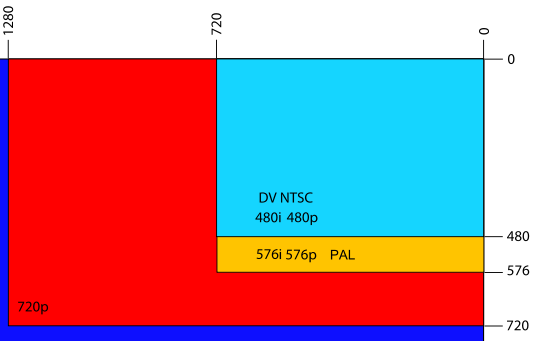
- HD High definition
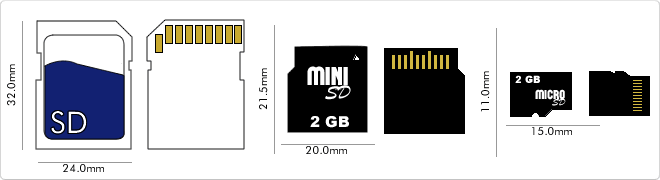
- SD, MiniSD, MicroSD
- SDI
- VDC
Gbps (Gigabits per second) is a unit of data transfer rate equal to one billion bits per second.
In telecommunications and network engineering, Gbps defines the bandwidth capacity of fiber optic infrastructures (FTTH) and core backbones. This metric quantifies the effective throughput of a communication channel, enabling massive packet transfer without link saturation. Implementation at the physical layer requires high-speed interfaces like Gigabit Ethernet to manage digital signaling and ensure data flow integrity across the network nodes.
| Unit | Technical Equivalence |
|---|---|
| 1 Gbps (bits) | 1,000,000,000 b/s |
| 1 Gbps (Megabits) | 1,000 Mb/s |
Bandwidth Management and Network Capacity
A 1 Gbps link allows for efficient service segmentation via VLANs and traffic prioritization through QoS, supporting data-intensive real-time protocols without encountering bottlenecks at the hardware level.
Advantages of Gigabit Connectivity
- Significant reduction in latency for critical applications.
- Support for multiple concurrent 4K/8K video streams.
- Enhanced cloud synchronization and backup speeds.
- Seamless scalability for IoT device density.
Gbps is the primary performance indicator in modern broadband and enterprise networking.