

10/19/2026 7:11 a.m.
https://cablematic.com/en/products/9-port-10100-mbps-desktop-switch-tp-link-tl-sf1009p-TP545/
https://cablematic.com/en/products/9-port-10100-mbps-desktop-switch-tp-link-tl-sf1009p-TP545/
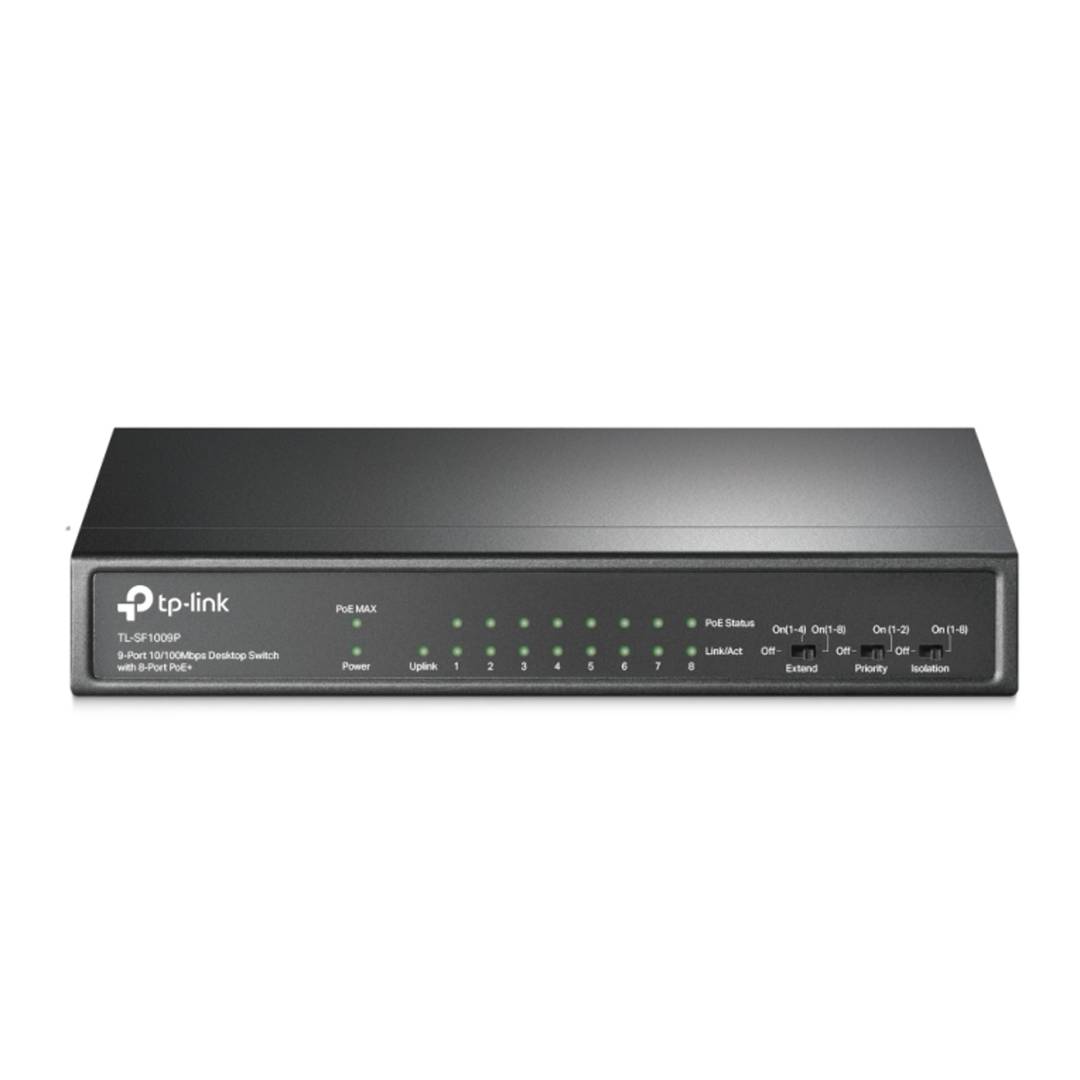

9-port 10/100 Mbps desktop switch TP-Link TL-SF1009P
9-port 10/100 Mbps desktop switch TP-Link TL-SF1009P
REF: TP545

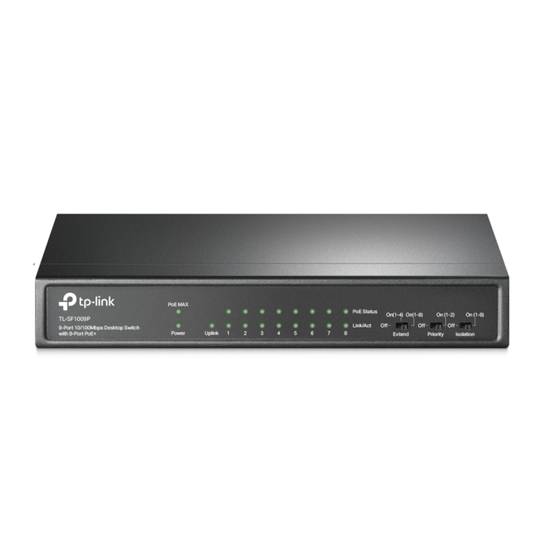
Specifications
- Switch Type: Unmanaged.
- Basic type RJ-45 Ethernet switching ports: Fast Ethernet (10/100).
- MAC address table: 2000 entries.
- Switching capacity: 1.6 Gbit/s.
- Network standards: IEEE 802.3af, IEEE 802.3at, IEEE 802.3i, IEEE 802.3u, IEEE 802.3x.
PVP
€48.12
Price including VAT:
€48.12
PVD
€44.55
PVP: Retail price.
Check conditions.
PVP: Sale price to distributors.
Check conditions.
 2 years
warranty
 14 days
returns
 100%
100%safe
Specifications
- Switch Type: Unmanaged.
- Basic type RJ-45 Ethernet switching ports: Fast Ethernet (10/100).
- MAC address table: 2000 entries.
- Switching capacity: 1.6 Gbit/s.
- Network standards: IEEE 802.3af, IEEE 802.3at, IEEE 802.3i, IEEE 802.3u, IEEE 802.3x.
Related products

More info
It has 9 basic Fast Ethernet (10/100) RJ-45 Ethernet switching ports. This unit has a MAC address table of 2000 entries and a switching capacity of 1.6 Gbit/s. It is designed to comply with IEEE 802.3af, IEEE 802.3at, IEEE 802.3i, IEEE 802.3u, and IEEE 802.3x network standards, as well as Power over Ethernet (PoE). This unit from TP-Link is an ideal solution for connecting network devices. Manufactured by Tp-link with reference TL-SF1009P.
Specifications
- Switch Type: Unmanaged.
- Basic type RJ-45 Ethernet switching ports: Fast Ethernet (10/100).
- MAC address table: 2000 entries.
- Switching capacity: 1.6 Gbit/s.
- Network standards: IEEE 802.3af, IEEE 802.3at, IEEE 802.3i, IEEE 802.3u, IEEE 802.3x.
- Power over Ethernet (PoE).
- Ideal for connecting devices to the network, sharing Internet connections, sharing files, etc.
- Compatibility: Supports all devices with an Ethernet connection.
- Connections: 9 RJ45 Ethernet ports.
- Features: greater network security, bandwidth control, etc.
- Colour: black.
- Technology: Ethernet, switching, PoE.
- Gross Weight: 200 g
- Number of packages: 1
Technical terms
- PoE
- Gbps
- RJ45
- Categories network cables
- Rack unit (U)
PoE
or fed and enables easier application of uninterruptible power supplies (UPS) to ensure operation 24 hours a day, 7 days a week.