

10/08/2026 3:31 p.m.
https://cablematic.com/en/products/arduino-nano-33-iot-board-with-headers-AR140/
https://cablematic.com/en/products/arduino-nano-33-iot-board-with-headers-AR140/
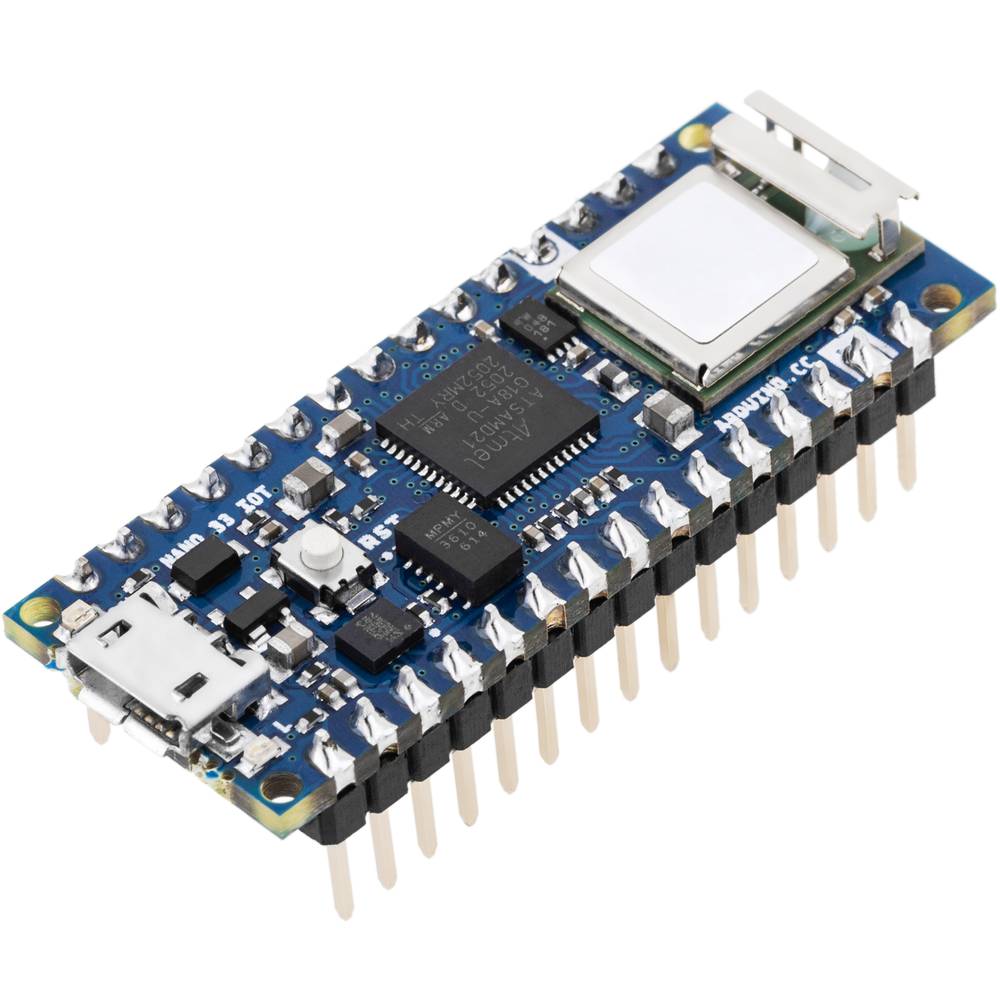

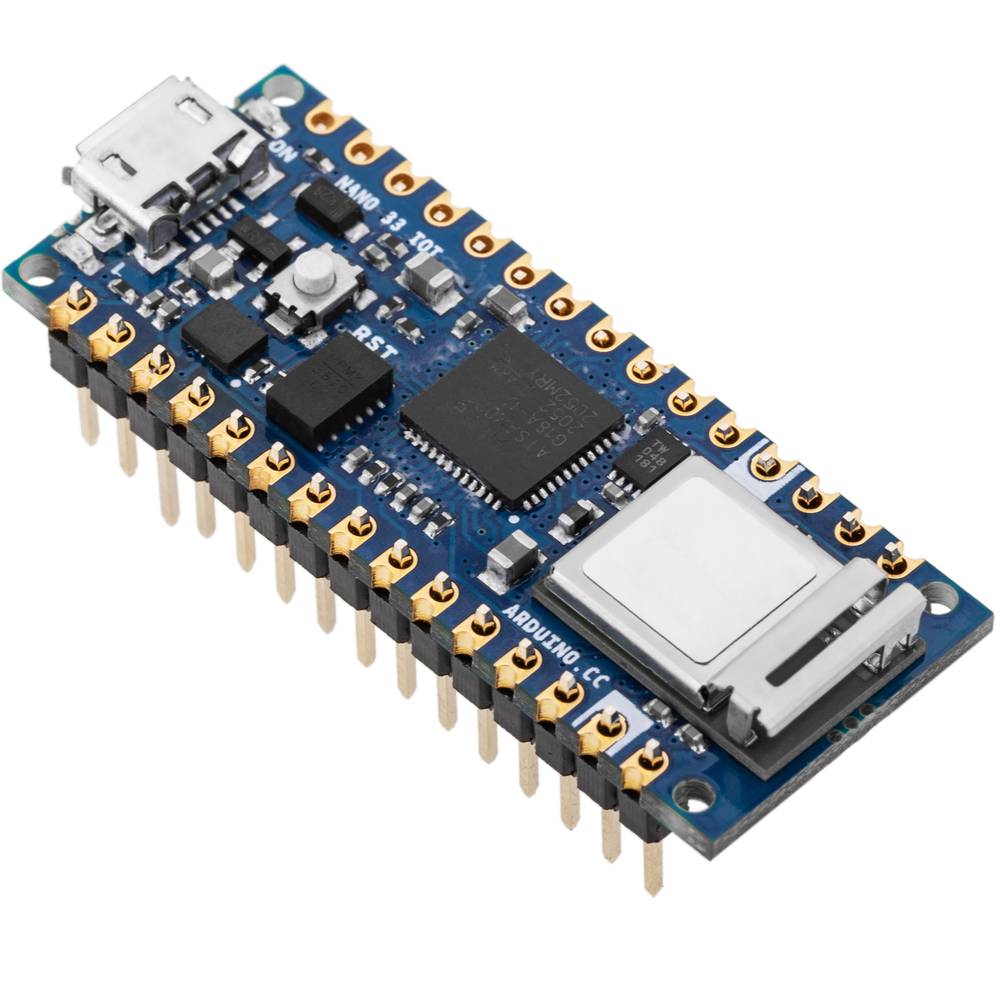
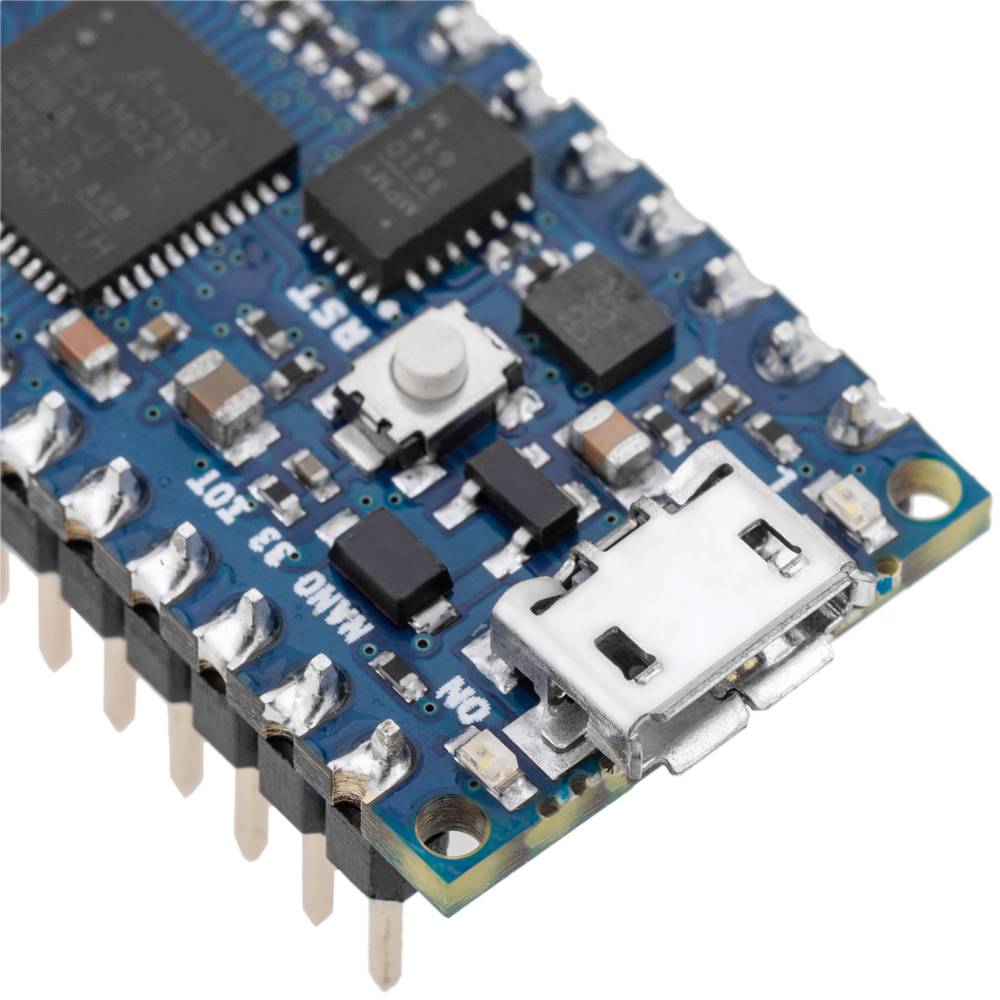
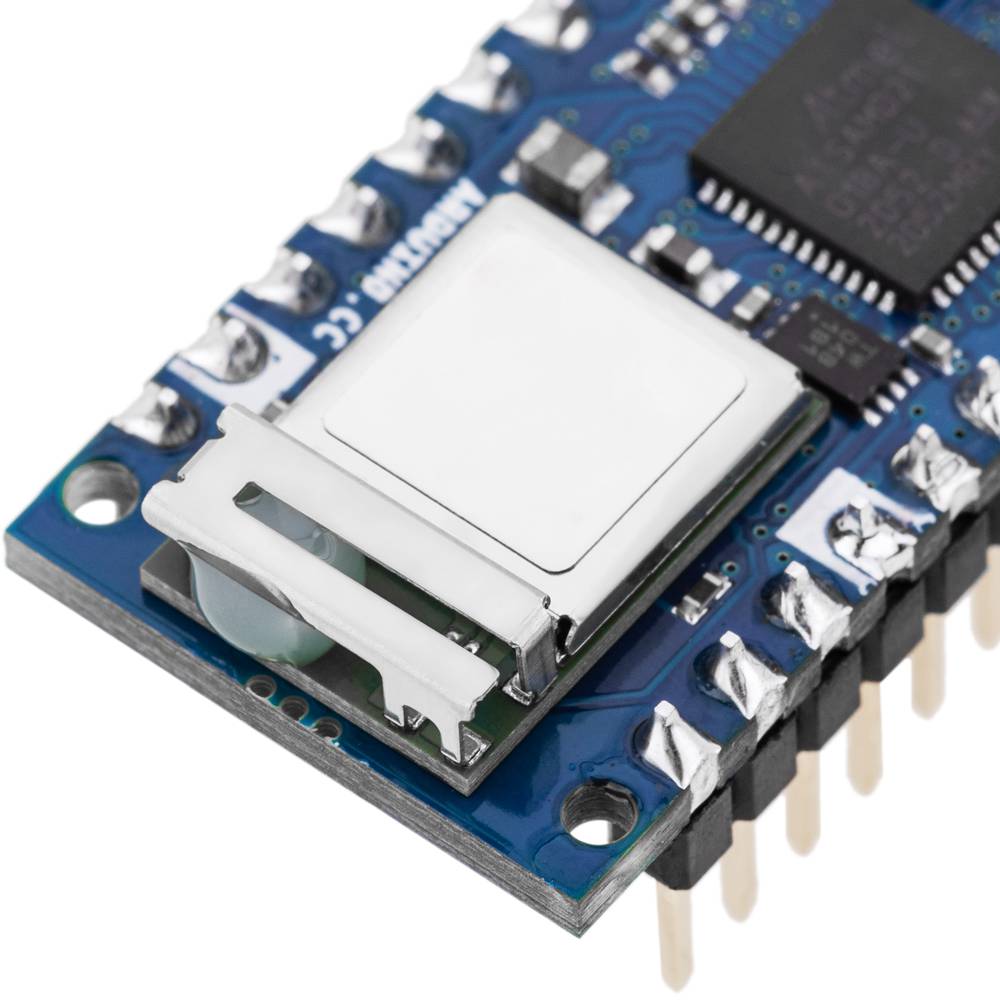

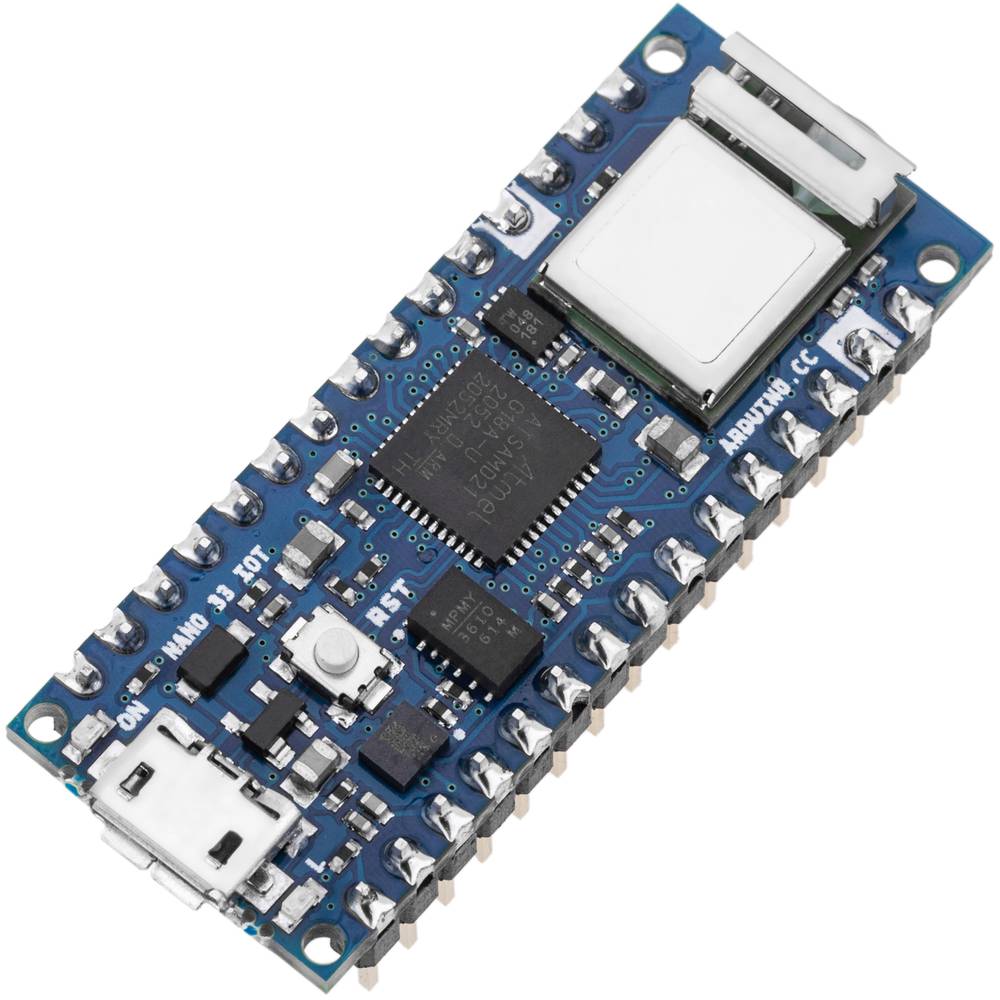


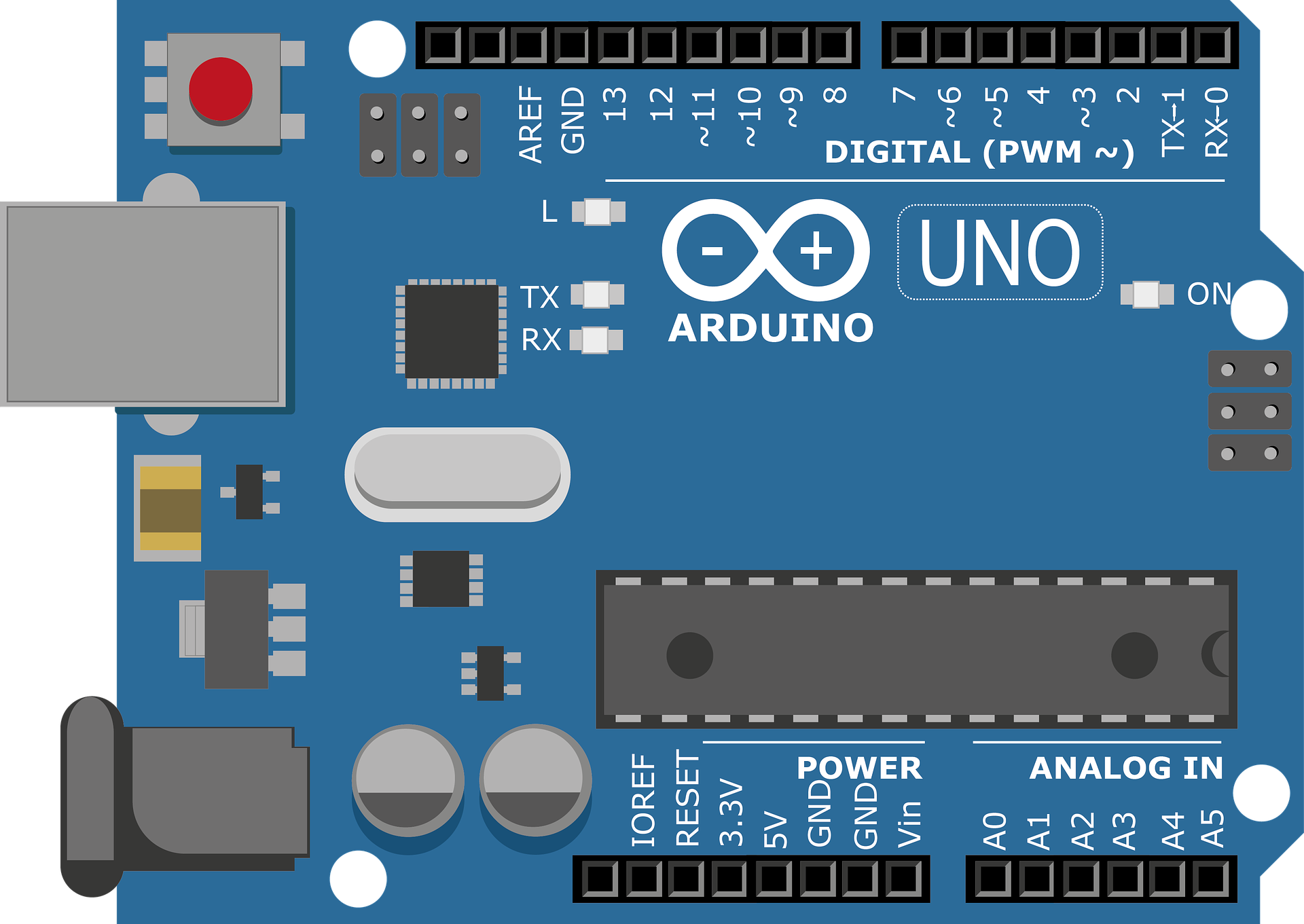
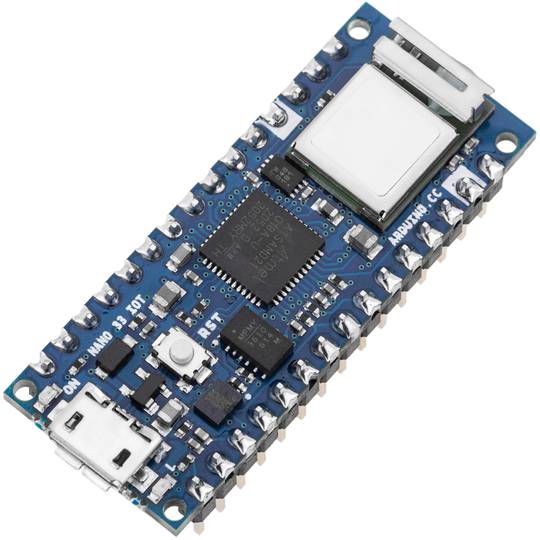
Arduino Nano 33 IoT board with headers
Arduino Nano 33 IoT board with headers
REF: AR140


Specifications
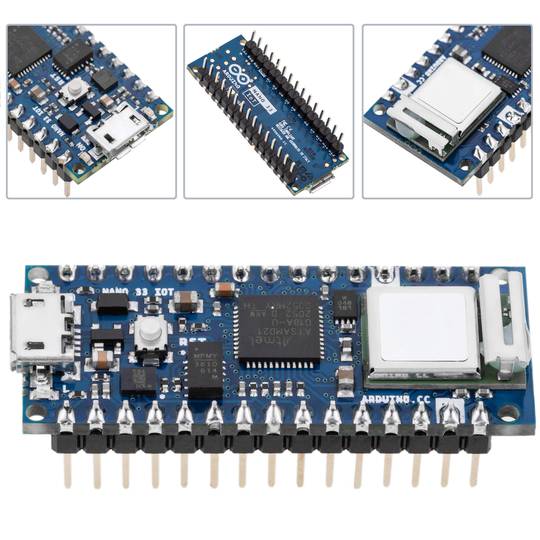
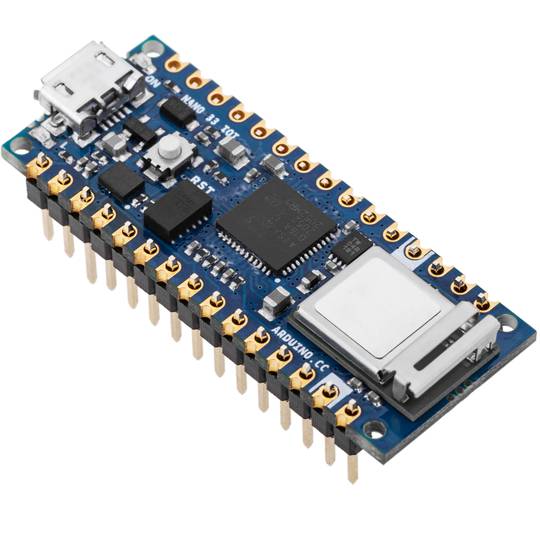
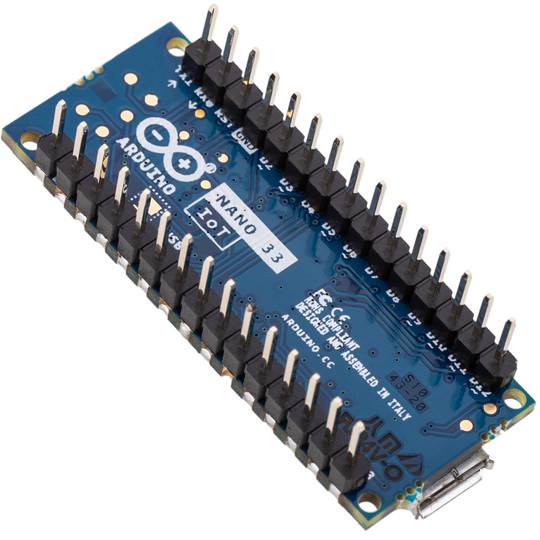
- Arduino Nano 33 IoT board that serves as a practical and simple solution for home or office connectivity.
- Robust and powerful board equipped with WiFi and Bluetooth 4.2 connectivity with low power consumption (BLE). Input voltage: 4.5V to 21V. 3.3V operating.
- Board that adapts to improve existing devices (and create new ones) to be part of the IoT and design pico-network applications.
- It has a low consumption 32-bit ATSAMD21 cryptographic microchip, which works as the main processor of the board and supports Layer Secure Transport (TLS).
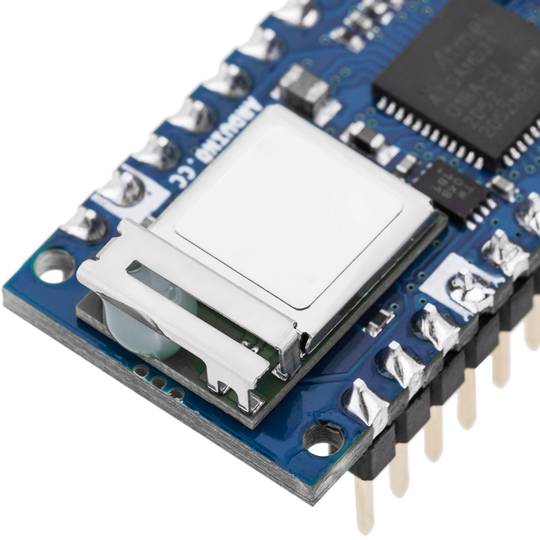
- WiFi and Bluetooth connectivity is done with a module from u-blox, the NINA-W10, a low-power chipset that operates in the 2.4GHz range.
![play_button]() Watch video
Watch video
More info
 Watch video
PVP
€37.80
Price including VAT:
€37.80
PVD
€34.37
PVP: Retail price.
Check conditions.
PVP: Sale price to distributors.
Check conditions.
 2 years
warranty
 14 days
returns
 100%
100%safe
We will notify you when it is back in stock.
Specifications
- Arduino Nano 33 IoT board that serves as a practical and simple solution for home or office connectivity.
- Robust and powerful board equipped with WiFi and Bluetooth 4.2 connectivity with low power consumption (BLE). Input voltage: 4.5V to 21V. 3.3V operating.
- Board that adapts to improve existing devices (and create new ones) to be part of the IoT and design pico-network applications.
- It has a low consumption 32-bit ATSAMD21 cryptographic microchip, which works as the main processor of the board and supports Layer Secure Transport (TLS).
- WiFi and Bluetooth connectivity is done with a module from u-blox, the NINA-W10, a low-power chipset that operates in the 2.4GHz range.
Related products
Keywords
Did not find what you were looking for? These topic could help you
More info
Arduino Nano 33 board that allows secure IoT connectivity. Small and powerful plate, equipped with WiFi and Bluetooth connectivity. It has a microchip that guarantees secure communication. It offers the possibility to build a sensor network connected to your office or home router, and also to create a Bluetooth device that sends data to a mobile phone. Board with high efficiency, ideal for the development of the Internet of things in daily life.
specs
- Arduino Nano 33 IoT board that serves as a practical and simple solution for home or office connectivity.
- Robust and powerful board equipped with WiFi and Bluetooth 4.2 connectivity with low power consumption (BLE). Input voltage: 4.5V to 21V. 3.3V operating.
- Board that adapts to improve existing devices (and create new ones) to be part of the IoT and design pico-network applications.
- It has a low consumption 32-bit ATSAMD21 cryptographic microchip, which works as the main processor of the board and supports Layer Secure Transport (TLS).
- WiFi and Bluetooth connectivity is done with a module from u-blox, the NINA-W10, a low-power chipset that operates in the 2.4GHz range.
- It features a 6-axis IMU, which makes this board perfect for simple vibration alarm systems, pedometers, relative robot positioning, etc.
- Flash memory: 256 KB. SRAM: 32 KB. Clock up to 48 MHz.
- Dimensions: 18 x 45 mm.
- Gross Weight: 16 g
- Product size (width x depth x height): 1.8 x 1.0 x 4.5 cm
- Number of packages: 1
- Packages size: 8.0 x 6.0 x 2.5 cm
Technical terms
- Bluetooth
- Hz
- Wifi
- Arduino
- Movement detector
Bluetooth
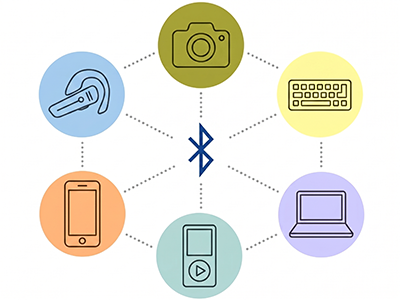
Bluetooth is a short-range wireless communication technology standard used for exchanging data and voice between digital devices using UHF radio waves in the 2.4 GHz band.
| Feature | Specification |
|---|---|
| Frequency | 2.402 - 2.480 GHz |
Technical Detail
Managed by the SIG, it uses Adaptive Frequency Hopping (AFH) to reduce interference. It distinguishes between Bluetooth Classic for streaming and BLE for low-power IoT applications.
Advantages
- Minimal power consumption.
- Global hardware compatibility.
- Robust encrypted security.
Note: Effective range varies by device class, typically between 1 and 100 meters.