

https://cablematic.com/en/products/tp-link-archer-mr400-dual-band-4g-lte-router-TP405/
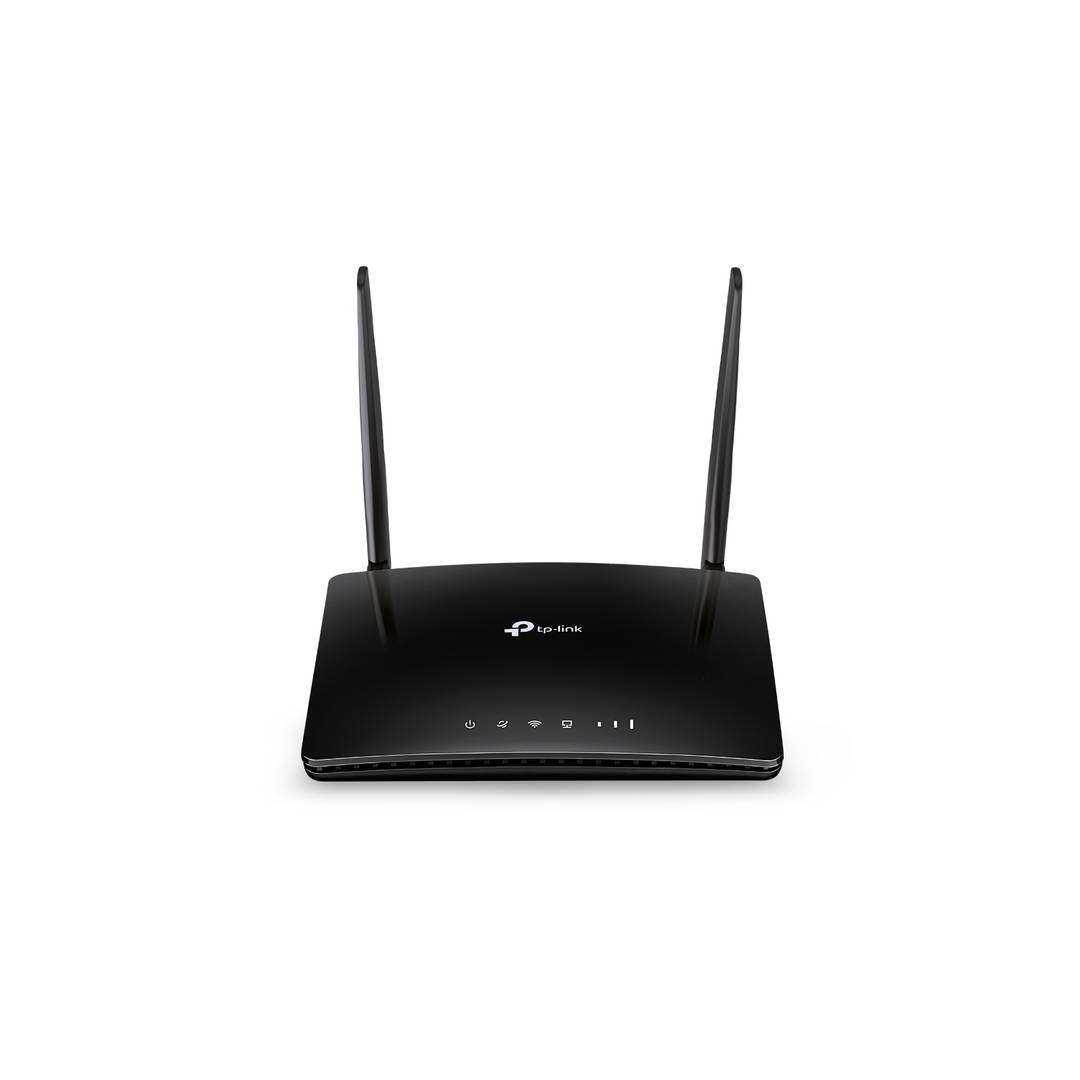

TP-Link Archer MR400 Dual Band 4G LTE Router

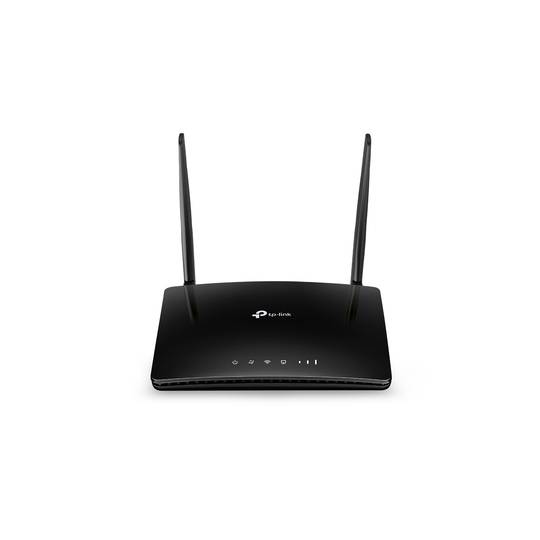
- Ideal for connecting a home or office network to a 4G mobile network.
- WAN connection type: RJ-45.
- Wi-Fi Band: Dual Band (2.4GHz / 5GHz), Wi-Fi Standard: Wi-Fi 5 (802.11ac).
- WLAN data transfer rate (max.): 867 Mbit/s.
- Ethernet LAN interface type: Fast Ethernet, Ethernet LAN, data transfer rate: 10.100 Mbit/s, Cabling technology: 10/100Base-T(X).
 2 years
warranty
 14 days
returns
 100%
100%safe
- Ideal for connecting a home or office network to a 4G mobile network.
- WAN connection type: RJ-45.
- Wi-Fi Band: Dual Band (2.4GHz / 5GHz), Wi-Fi Standard: Wi-Fi 5 (802.11ac).
- WLAN data transfer rate (max.): 867 Mbit/s.
- Ethernet LAN interface type: Fast Ethernet, Ethernet LAN, data transfer rate: 10.100 Mbit/s, Cabling technology: 10/100Base-T(X).
Related products



More info
Connectivity device that offers an RJ-45 type WAN connection, with a dual band Wi-Fi of 2.4GHz and 5GHz, Wi-Fi 5 (802.11ac) standard and a maximum WLAN data transfer rate of 867 Mbit/ s. It features a Fast Ethernet LAN Ethernet interface, with a data transfer rate of 10.100 Mbit/s and 10/100Base-T(X) cabling technology. It supports a generation of 4G mobile network and the 2G Edge, GPRS and GSM standards, as well as the 3G standards DC-HSPA+, HSPA, HSPA+ and UMTS. Finally, the device has reinforced security thanks to the 64-bit WEP, 128-bit WEP, WPA, WPA-PSK, WPA2 and WPA2-PSK algorithms. Manufactured by Tp-link with reference ARCHER MR400.
Specifications
- Ideal for connecting a home or office network to a 4G mobile network.
- WAN connection type: RJ-45.
- Wi-Fi Band: Dual Band (2.4GHz / 5GHz), Wi-Fi Standard: Wi-Fi 5 (802.11ac).
- WLAN data transfer rate (max.): 867 Mbit/s.
- Ethernet LAN interface type: Fast Ethernet, Ethernet LAN, data transfer rate: 10.100 Mbit/s, Cabling technology: 10/100Base-T(X).
- Mobile network generation: 4G, 2G standards: Edge, GPRS, GSM, 3G standards: DC-HSPA+, HSPA, HSPA+, UMTS.
- Supported security algorithms: 64-bit WEP, 128-bit WEP, WPA, WPA-PSK, WPA2, WPA2-PSK.
- Colour: Black.
- Compatibility: Windows 7/8/10, Mac OS, Linux.
- Gross Weight: 664 g
- Product size (width x depth x height): 30.0 x 22.0 x 7.0 cm
- Number of packages: 1
- Packages size: 30.0 x 22.0 x 7.0 cm
Technical terms
- GPRS
- Hz
- GSM
- UMTS
- MiFi
- WAN
- RJ45
- Categories network cables
- 4G
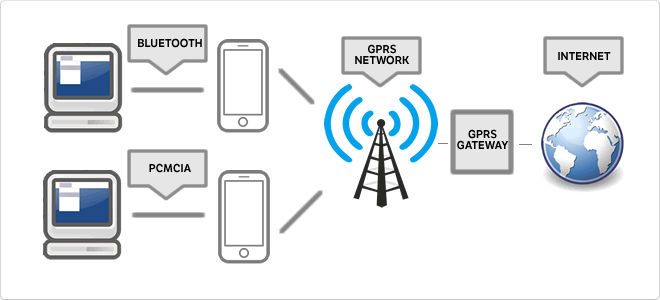
GPRS (General Packet Radio Service) is a key evolution in second-generation (GSM) mobile networks, introducing packet switching over an infrastructure originally designed for circuit switching.
This technology optimizes radio resource utilization by assigning channels only during actual data transfer, enabling permanent IP connectivity and more efficient spectrum use. The GPRS architecture integrates new logical nodes into the GSM core network, primarily the SGSN and GGSN, which handle packet routing and interfacing with external data networks like the Internet.
| Specification | Value/Description |
|---|---|
| Theoretical Data Rate | 56 kbps to 114 kbps |
| Switching Method | Packet Switching |
| Coding Schemes | CS-1, CS-2, CS-3, CS-4 |
| Generation | 2.5G |
The implementation of GPRS served as the catalyst for the transition toward mobile broadband services, enabling WAP browsing and multimedia messaging (MMS) for the first time. Its current relevance lies in its persistence as a critical fallback layer for IoT devices and embedded systems requiring global coverage and redundancy in areas where LTE or 5G technologies are not feasible due to hardware constraints.
Terminal Operational Classification
Devices are categorized by their ability to handle voice and data services: Class A allows simultaneous use; Class B connects to both but suspends data during calls; Class C requires manual switching between modes.
Main Advantages
- "Always-on" connectivity without call setup latency for data.
- Billing based on data volume rather than connection time.
- Compatibility with IP and X.25 protocols.
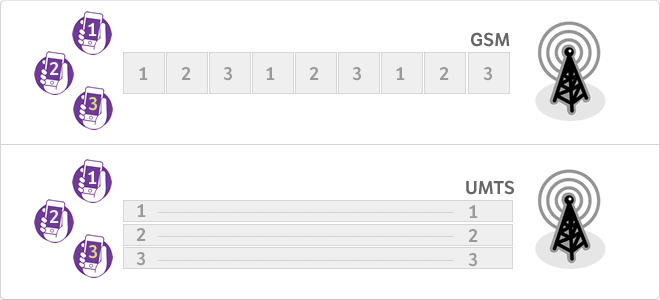
- Dynamic radio spectrum optimization via multiplexing.
GPRS laid the foundation for the packet-based infrastructure that defines modern mobility.