

10/14/2026 9:31 p.m.
https://cablematic.com/en/products/tp-link-tl-sg1016pe-16-port-easy-smart-switch-TP530/
https://cablematic.com/en/products/tp-link-tl-sg1016pe-16-port-easy-smart-switch-TP530/
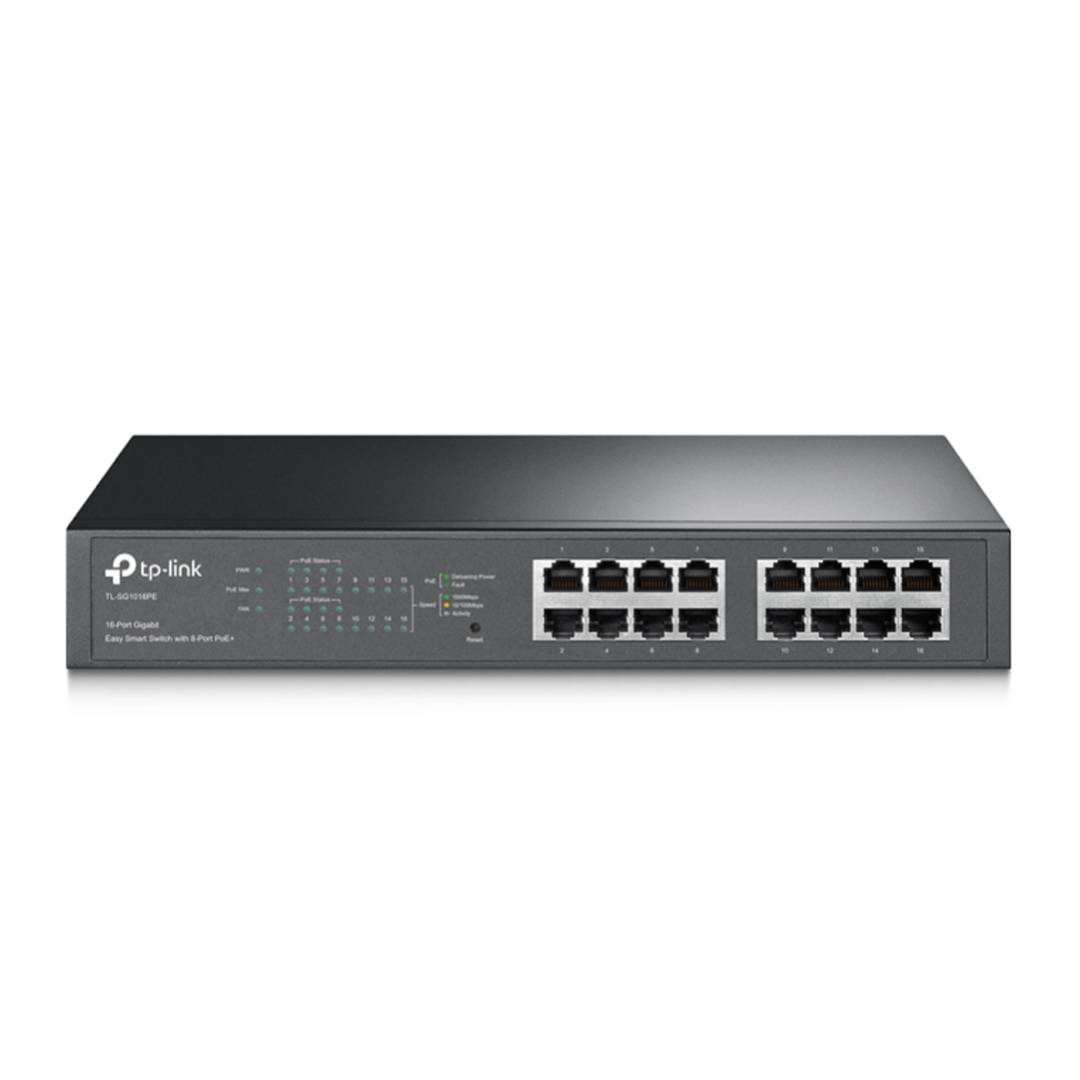

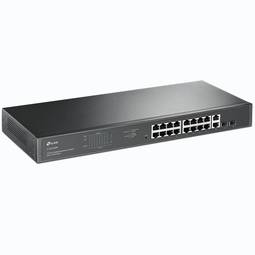
TP-Link TL-SG1016PE 16-port Easy Smart Switch
TP-Link TL-SG1016PE 16-port Easy Smart Switch
REF: TP530

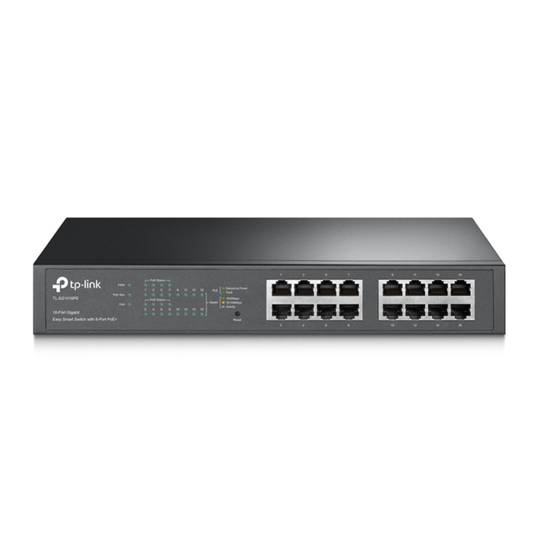
Specifications
- Switch layer: L2.
- Basic type RJ-45 Ethernet switching ports: Gigabit Ethernet (10/100/1000).
- Number of basic switching RJ-45 Ethernet ports: 16.
- MAC address table: 8000 entries.
- Switching capacity: 32 Gbit/s.
PVP
€212.52
Price including VAT:
€212.52
PVD
€172.50
PVP: Retail price.
Check conditions.
PVP: Sale price to distributors.
Check conditions.
 2 years
warranty
 14 days
returns
 100%
100%safe
Specifications
- Switch layer: L2.
- Basic type RJ-45 Ethernet switching ports: Gigabit Ethernet (10/100/1000).
- Number of basic switching RJ-45 Ethernet ports: 16.
- MAC address table: 8000 entries.
- Switching capacity: 32 Gbit/s.
Related products
More info
Layer 2 managed switch with 16 Gigabit Ethernet RJ-45 basic switch ports (10/100/1000). It supports up to 8,000 MAC address table entries, with a switching capacity of 32 Gbit/s. It complies with IEEE 802.1Q, IEEE 802.1p, IEEE 802.3ab, IEEE 802.3i, IEEE 802.3u, IEEE 802.3x standards and features Power over Ethernet (PoE). It comes in a 1U form factor for rack mounting. Manufactured by Tp-link with reference TL-SG1016PE.
Specifications
- Switch layer: L2.
- Basic type RJ-45 Ethernet switching ports: Gigabit Ethernet (10/100/1000).
- Number of basic switching RJ-45 Ethernet ports: 16.
- MAC address table: 8000 entries.
- Switching capacity: 32 Gbit/s.
- Network standards: IEEE 802.1Q, IEEE 802.1p, IEEE 802.3ab, IEEE 802.3i, IEEE 802.3u, IEEE 802.3x.
- Power over Ethernet (PoE): Yes.
- Rack Mount: Yes
- Form factor: 1U.
- Gross Weight: 4.0 kg
- Number of packages: 1
Technical terms
- RACK 19
- PoE
- Gbps
- RJ45
- Categories network cables
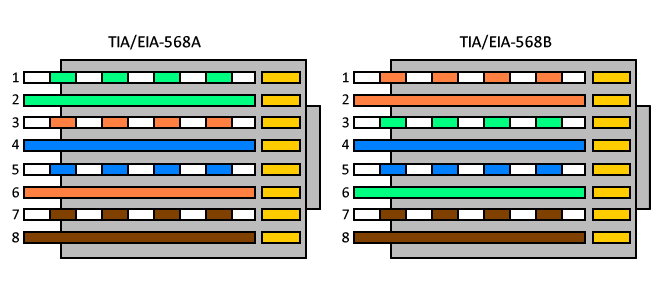
- Rack unit (U)
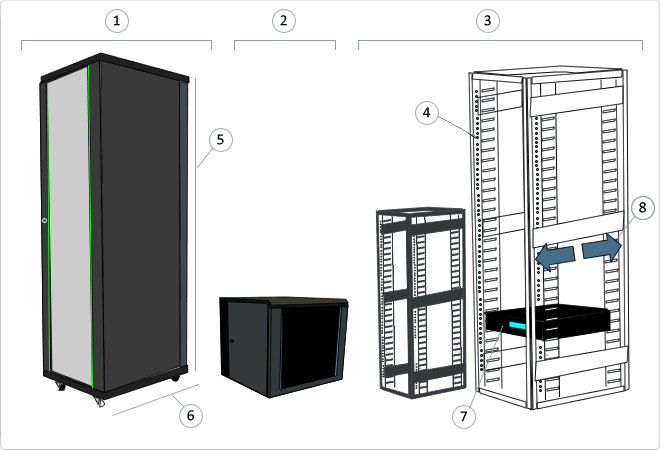
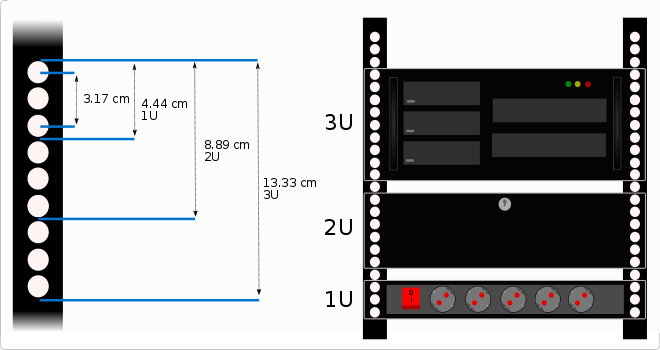
RACK 19
A rack is a metal support designed to house electronic, computer and communications equipment. The measures for the width are normalized to be compatible with most equipment manufacturers. They are also called racks, cabinets, cabinets or closets. Each column has holes at regular intervals called U rack units (Pictured: 4) grouped in threes. The height (Pictured:5) of the racks is standardized and external dimensions of 200 mm by 200 mm. Being normal that from 4U to 46/47U height width types (Pictured: 7). Standard 600 mm or 800 mm Types of background (Pictured: 6) The depth of the frame is not standardized, as this flexibility is granted (Pictured: 8) to the equipment. The most common are: - 450 mm - 600 mm - 800 mm - 900 mm - 1000 mm - 1200 mm Type 19-inch rack can find various types of 19-inch rack. Rack Mural (Pictured: 2): Used to accommodate electronic network. They are the smallest and are anchored to wall. Rack Pie (Pictured: 1): They are used primarily for servers, UPS and network electronics. Open Rack (Pictured: 3): Open Rack Racks are available only modelsstructure, eliminating doors and other accessories.