

09/30/2026 7:56 a.m.
https://cablematic.com/en/products/ubiquiti-am-5g19-120-airmax-5-ghz-sector-antenna-with-19-dbi-and-a-120deg-angle-UI137/
https://cablematic.com/en/products/ubiquiti-am-5g19-120-airmax-5-ghz-sector-antenna-with-19-dbi-and-a-120deg-angle-UI137/
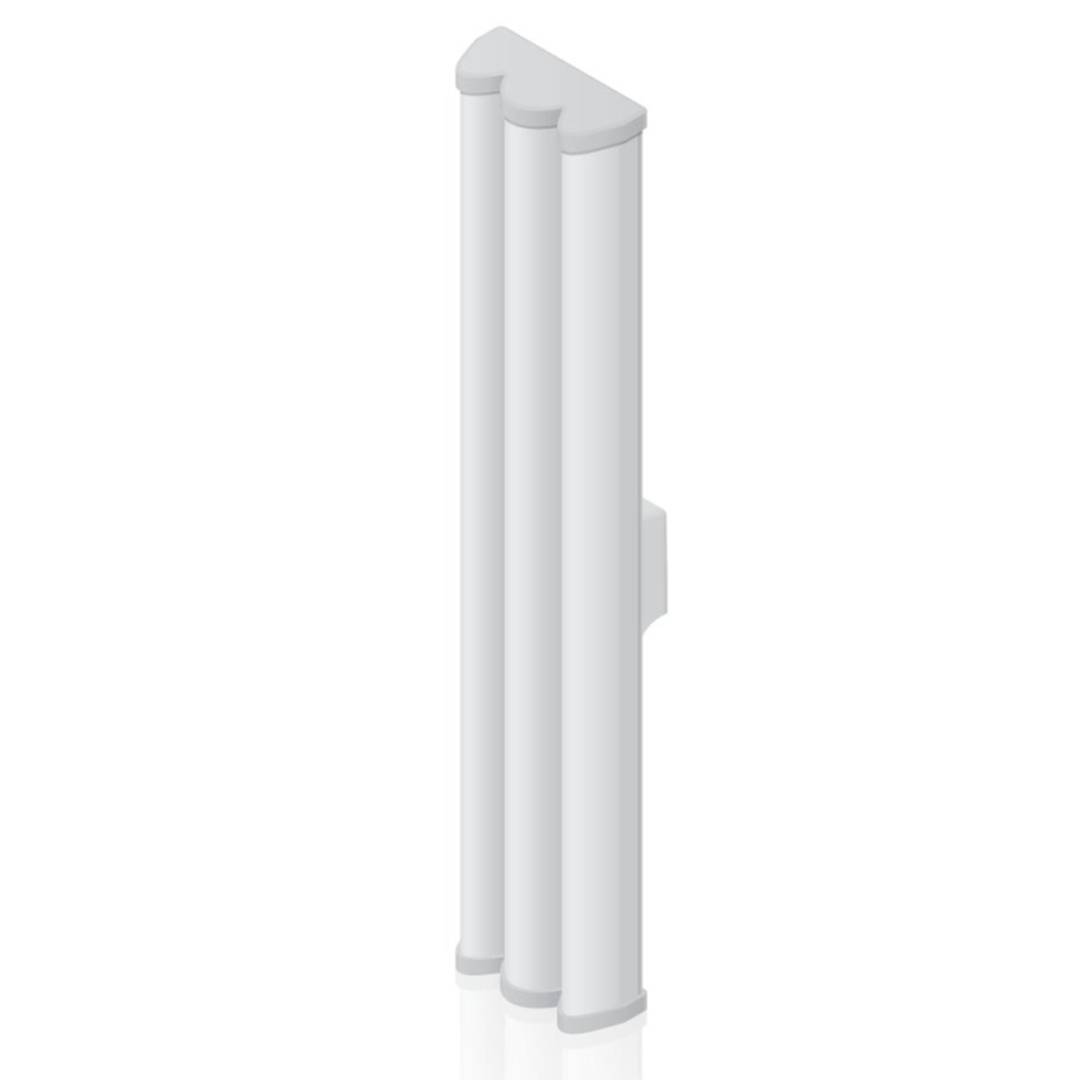

Ubiquiti AM-5G19-120 AirMax 5 GHz sector antenna with 19 dBi and a 120° angle
Ubiquiti AM-5G19-120 AirMax 5 GHz sector antenna with 19 dBi and a 120° angle
REF: UI137
Specifications
- Antenna gain (max): 19.1 dBi
- Band frequency: 5.15 - 5.85 GHz
- Horizontal Beam Width: 123°
- Antenna type: Sector antenna
- Polarization: Dual Polarization
PVP
€166.82
Price including VAT:
€166.82
PVD
€135.40
PVP: Retail price.
Check conditions.
PVP: Sale price to distributors.
Check conditions.
 2 years
warranty
 14 days
returns
 100%
100%safe
Specifications
- Antenna gain (max): 19.1 dBi
- Band frequency: 5.15 - 5.85 GHz
- Horizontal Beam Width: 123°
- Antenna type: Sector antenna
- Polarization: Dual Polarization
More info
Ubiquiti sector antenna designed to operate in the frequency band from 5.15 to 5.85 GHz. This antenna has a maximum gain of 19.1 dBi, an angle of 123° in the horizontal beam, dual polarization and a ratio of voltage standing wave (VSWR) of 1.5:1. In addition, its measurements are 700 mm wide, 135 mm deep and 73 mm high, and it is sold in single-unit packages. Manufactured by Ubiquiti with reference AM-5G19-120.
Specifications
- Antenna gain (max): 19.1 dBi
- Band frequency: 5.15 - 5.85 GHz
- Horizontal Beam Width: 123°
- Antenna type: Sector antenna
- Polarization: Dual Polarization
- Voltage Standing Wave Ratio (VSWR): 1.5:1
- Width: 700mm
- Depth: 135mm
- Height: 73mm
- Quantity per package: 1 pc(s)
- Ubiquiti manufacturer reference: AM-5G19-120
- Use: This high-performance sector antenna is ideal for long-distance link applications and for signal distribution in high-density user environments.
- Compatibility: Compatible with 802.11ac devices
- Connections: RP-SMA connector
- Features: Weatherproof design, Mounting system included
- Colour: Black
- Technology: 802.11ac
- Gross Weight: 3.0 kg
- Number of packages: 1
Technical terms
- Hz
- dBi
Hz
One hertz is one cycle per second, meaning repeating cycle as an event. For example, hertz is applied physics measuring the number of times for a second wave (either acoustic or electromagnetic) is repeated or can be applied, among other uses, to ocean waves that reach the Beach vibrations per second or a solid. The quantity that measures the frequency hertz is called,in this regard, the inverse of the period. One hertz is an oscillation frequency of suffering a particle over a period of one second.