

https://cablematic.com/en/products/white-omnidirectional-antenna-mikrotik-tof-2400-8v-4-MK132/
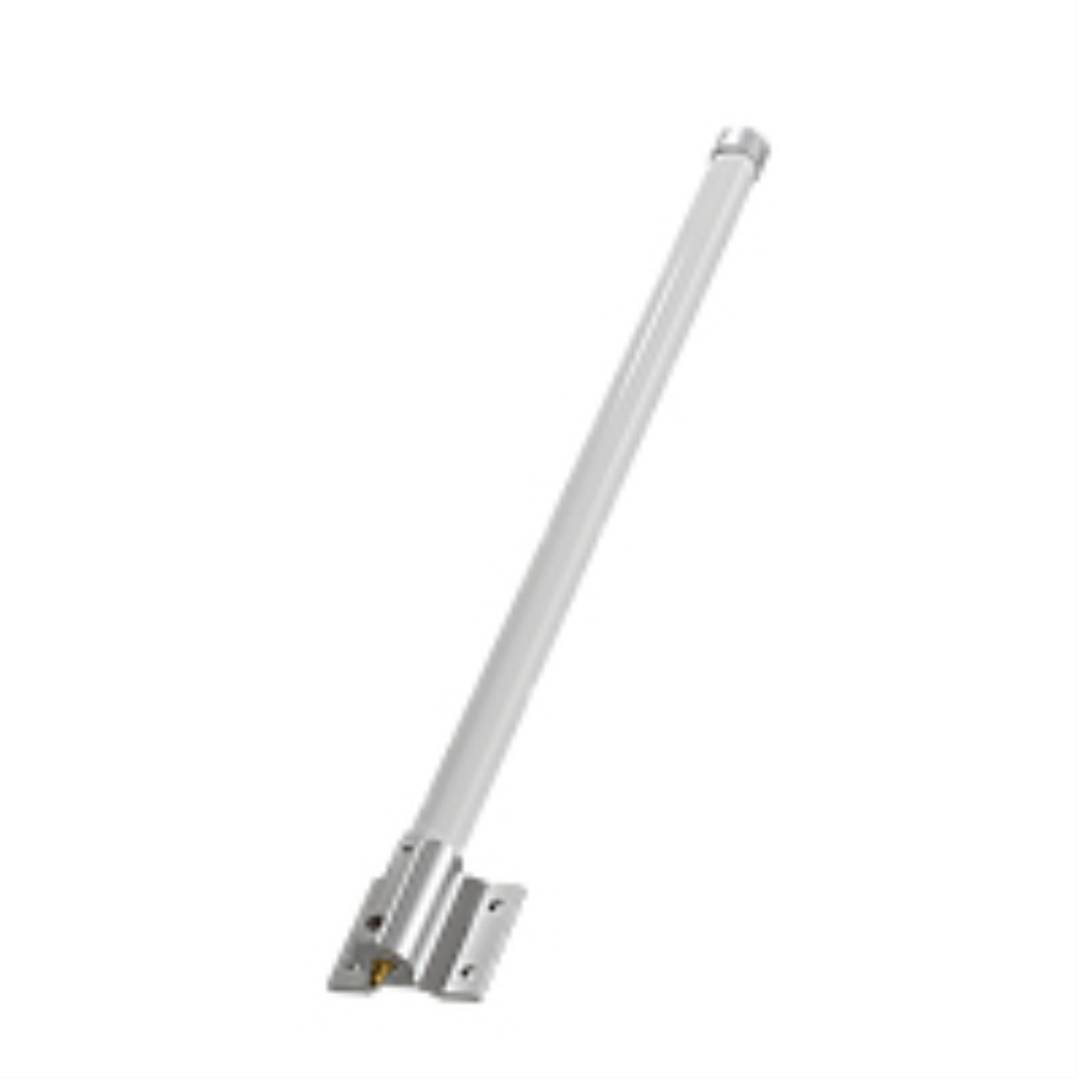

White omnidirectional antenna MikroTik TOF-2400-8V-4

- Mikrotik TOF-2400-8V-4, 8 dBi, 0.240 - 0.250 GHz, 50 Ω
- 360° omnidirectional coverage
- 18° horizontal opening
- Ideal for long distance links
- suitable for outdoor
 2 years
warranty
 14 days
returns
 100%
100%safe
- Mikrotik TOF-2400-8V-4, 8 dBi, 0.240 - 0.250 GHz, 50 Ω
- 360° omnidirectional coverage
- 18° horizontal opening
- Ideal for long distance links
- suitable for outdoor
More info
The Mikrotik TOF-2400-8V-4 antenna offers a power of 8 dBi for the frequency of 0.240 - 0.250 GHz. This omnidirectional antenna has a gain of 50 O with an angular aperture of 360° and a vertical angle of 18°. Manufactured by Mikrotik with reference TOF-2400-8V-4.
Specifications
- Mikrotik TOF-2400-8V-4, 8 dBi, 0.240 - 0.250 GHz, 50 Ω
- 360° omnidirectional coverage
- 18° horizontal opening
- Ideal for long distance links
- suitable for outdoor
- Compatible with 802.11a/b/g/n
- RP-SMA connections
- White color
- Lora radio frequency technology
- Gross Weight: 1.0 kg
- Number of packages: 1
Technical terms
- dBi
- Hz
- RF or Radio Frequency
dBi (decibels relative to isotropic) is a logarithmic unit of measure that expresses the gain of an antenna compared to a theoretical isotropic antenna that radiates energy uniformly in all directions.
Imagine a light bulb that shines in all directions equally. If you put a reflector on it so the light concentrates in a single spot, that light will be much more intense there. The dBi measures how much extra "strength" the signal gains by focusing it in a specific direction instead of wasting it everywhere.
| Attribute | Specification |
|---|---|
| Reference | Isotropic radiator (0 dBi) |
| Scale Type | Logarithmic |
Directivity and Energy Focus
A higher dBi value does not mean the antenna produces more energy, but rather that it redirects existing energy more precisely, narrowing the beam angle to reach greater distances.
Advantages
- Increased range for wireless links.
- Reduction of side and rear interference.
- Better signal-to-noise ratio in the main direction.
A higher dBi value indicates a more directional and longer-range signal.