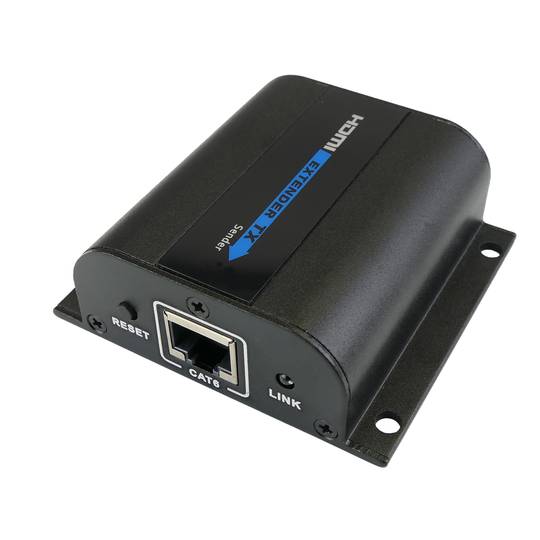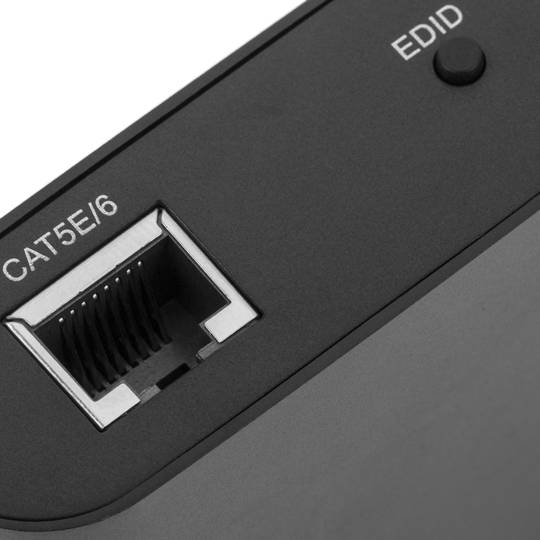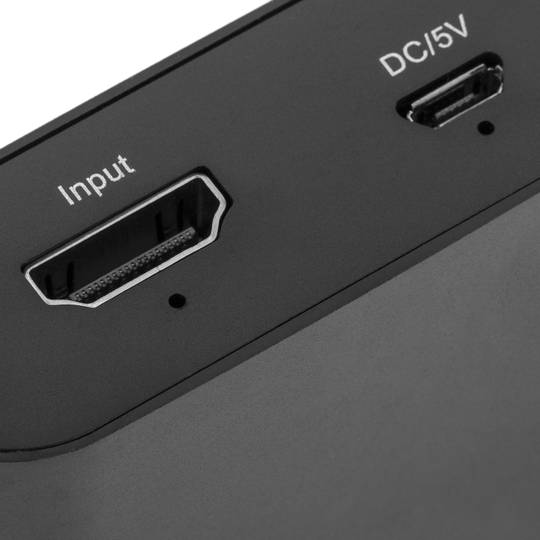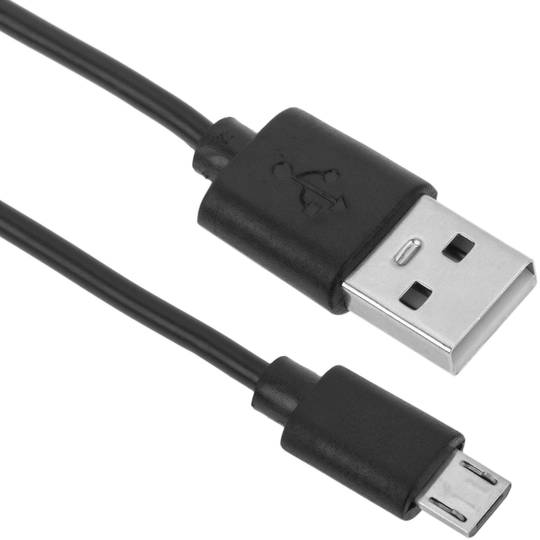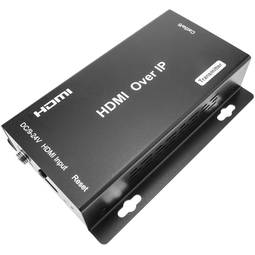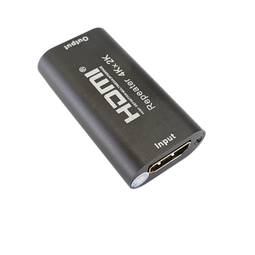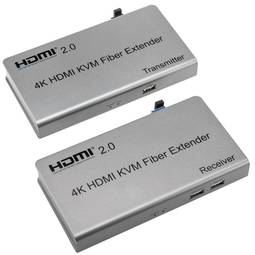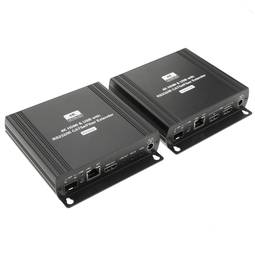
HD High definition
HD is the term used to differentiate the systems that generate, transmit or support HD content (High Definition) with those of standard definition or low definition (SD).
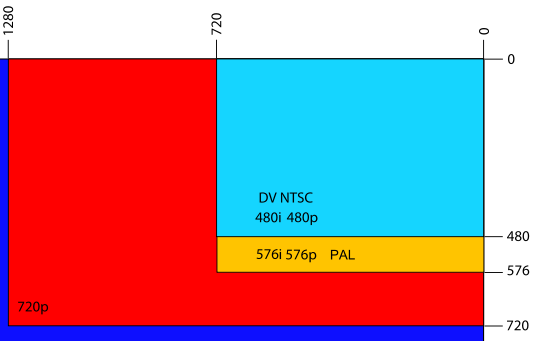
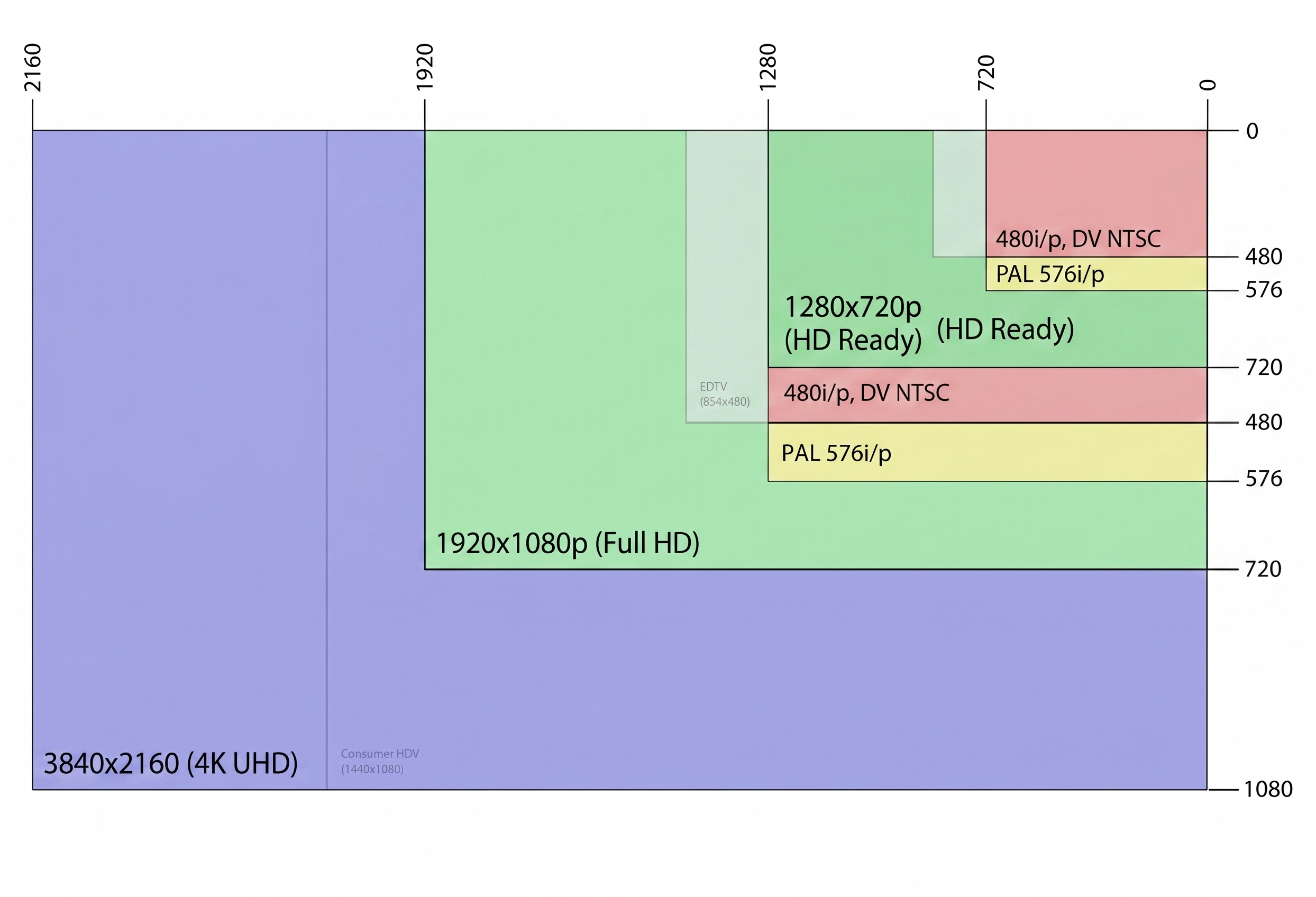
HD resolutions are usually at least 1280 x 720 pixels by taking the ratio "width x height". Being the height, 720 pixels, which make high resolution.
HDMI
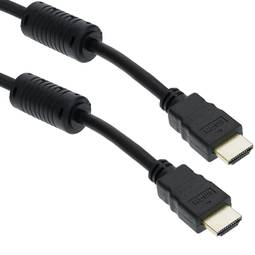
The English acronym "HDMi" refers to "High Definition Multimedia Interface", that is, it corresponds to the initials of high definition multimedia interface.
The HDMi interface allows the transmission of video and audio between different devices, supporting the video resolutions 480i, 480p, 576i, 576p, 720p, 1080i, 1080p, 1440p, 1600p.
Different versions of HDMi
HDMi 1.0
- December 2002.
- Maximum transfer of 4.9 Gbit / s.
- Support up to 165 Mpixels / s in video mode (1080p 60Hz or UXGA) and 8 channels / 192 kHz / 24-bit in audio mode.
HDMi 1.2
- August 2005.
- Added support for One Bit Audio, used in Super Audio CD, up to 8 channels.
- HDMi Type A availability for PC connectors.
HDMi 1.3
- June 2006
- Bandwidth at 340 MHz.
- 10.2 Gbit / s data rate.
- Dolby TrueHD and DTS-HD,
HDMi 1.4
- Send high definition video and audio,
- 3D data and video.
- FullHD to XHD (eXtended High Definition) up to 4096 × 2160 pixels (24 frames per second) or 3840 × 2160 to (30 frames per second).
- Audio return channel that will require fewer cables to have a surround sound system connected to the television.
- Ethernet connection built into the cable itself with speeds of up to 100 Mbit / s.
HDMi 2.0
- September of 2013
- Bandwidth up to 18 Gbit / s
- 4K @ 50/60 (2160p) video
- Up to 32 audio channels for a multi-dimensional immersive experience
- Up to 1536kHz audio frequency for maximum sound fidelity
- Simultaneous delivery of 2 streaming video for multiple users on the same screen
- Audio streaming up to 4 users
- Support Theater Angle 21: 9 radio
- Dynamic synchronization of video and audio in streaming
- CEC command extensions to control multiple devices from a single point.
Types of HDMi
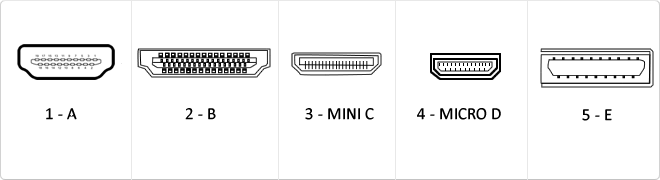
Type A (in image 1): It is the most standard connector used in almost all devices.
Type B (in image 2): It is a very little used connector.
Type C (in image 3): It is a connector widely used in tablets, smartphones and other devices.
Type D (in image 4): It is a connector used in smartphones.
Type E (in image 5): It is a connector used in vehicle connectivity.
![]()
USB
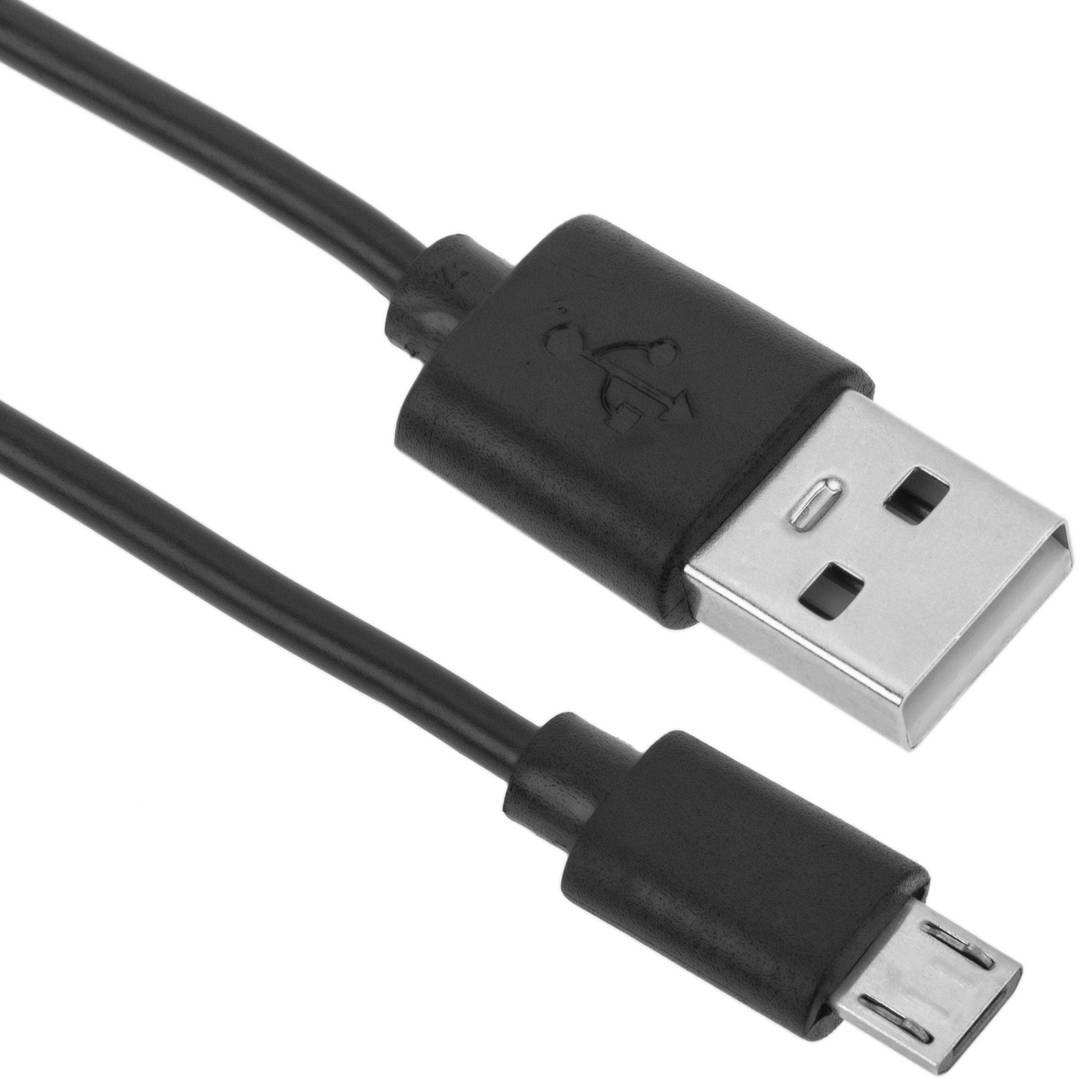
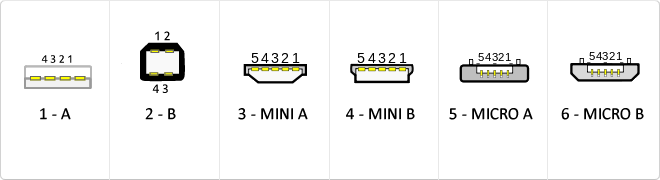
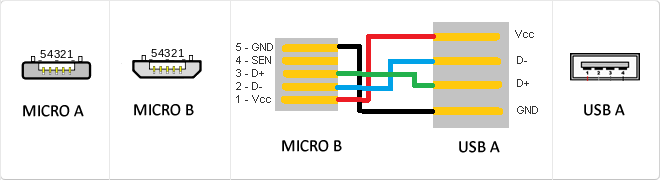
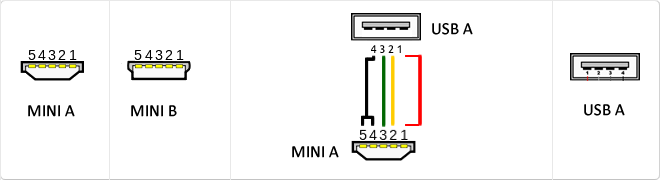
The USB (Universal Serial Bus) is a standard that defines the cables, connectors and used a bus to connect, communicate, computers, peripherals and electronic devices protocols Transmission Rates Low speed (USB 1.0). Transfer rate up to 1.5 Mbit/s (188 kB/s) used in keyboard, mouse ... transfer rate up to 12 Mbit/s (1.5 MB/s) High Speed ??(USB 2.0): Rate transferencia up to 480 Mbit/s (60 MB/s) SuperSpeed ??(USB 3.0) transfer rate up to 4.8 Gbit/s (600 MB/s) Connector Types 1 - USB type A (4 pin) 2. - USB type B (4 pin) 3 - Mini A (5-pin) 4 - Mini B (5-pin) 5 - Micro A (5-pin) 6 - Micro B (5-pin)
MicroUSB
or horizontal. The micro USB with five pins, which pins identification (ID) Micro AB USB connectors special work. AB connectors with pin ID can allow the device to function as a connector A or B to standard USB technology. This gives the new smart phones and other devices the option to act as either a single storage device or as provi
Mini USB
The mini USB connectors are smaller than their standard counterparts and have USB fifth pin. The fifth pin is known as the pin ID and is typically not used in mini USB connectors. It was designed to allow later improved USB technology. The mini USB connectors have a cycle life of at least 5000 connections and disconnections, which accommodates the mobile nature of the devices that are designed to interact. The standard USB connectors are generally used with devices that are stationary and not disconnected often.
Types of network cables (UTP, FTP, STP)
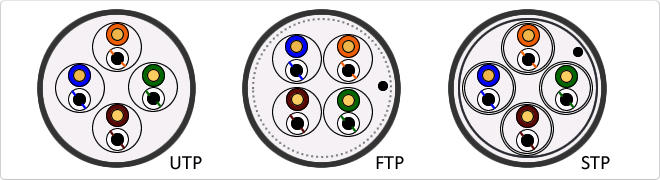
UTP cable is standard twisted pair is referred by its acronym UTP (Unshiedld Twiested Pair/Unshielded Twisted Pair). The major advantages of this cable are its low cost and ease of handling. Its main disadvantages are a higher error rate compared to other cable types and their limitations to work at high distances without regeneration. FTP is a type of cable caracteriza that each twisted pair is uniformly during creation. A comprehensive screening of all pairs is performed by a apantallante outer sheet. This technique allows to have similar characteristics to the shielded cable. STP is characterized by that each pair is covered with a metal mesh, in the same way that the coaxial cables, and the set of pairs is coated with a sheet apantallante. Referenced frequently with their acronym STP (Shield Twisted Pair/Shielded Twisted Pair)
USB 3.0
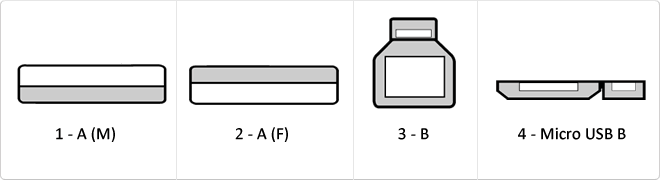
USB 3.0 is the second major revision of the standard Universal Serial Bus (USB) connectivity for computing. USB 3.0 has transmission speeds of up to 5 Gbit/s, which is 10 times faster than USB 2.0 (480 Mbit/s). Connector Types 1 - USB type A plug 2 - 3 USB type A female - USB type B 4 - Micro USB B
1080p
1080p is an alternative name for the maximum resolution used in high definition television (HDTV). The number 1080 represents 1080 lines of vertical display resolution, while the letter p stands for progressive scan and non-interlaced.
Reversible USB Type-C
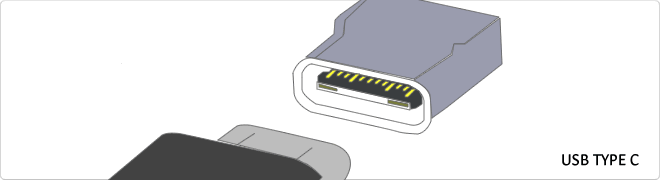
USB-C reversible USB version called USB cables USB Type C Type C or USB reversible. The important thing is this type of USB is that it has top and bottom. So you may save the blows that are given involuntarily to connect the connector upside down. It is also characterized in that when connected will make an audible "click". The USB-C or reversible USB cables can reach 10 Gbps and support USB 3.0, 3.1Use is estimated up to 10,000 applications and has some measures 8.4mm x 2.6mm is also compatible with USB 3.1 and USB indicate creators
VDC
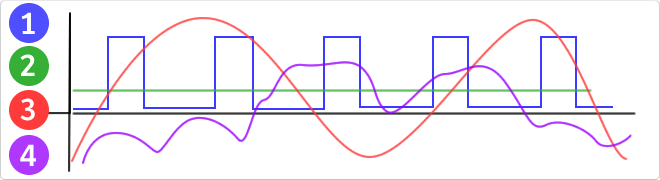
VDC would be the abbreviation for Volt Direct Current which translated would volts direct current. The idea of ??this type is unidirectional current to the load. Direct current is normally produced by batteries, thermocouples, solar cells and a dynamo electric machine type. The direct current can flow in conductors such as wires, but may also flow through semiconductors, insulators ... In the image: 1 - current per pulse 2 - Direct Current (DC) 3 - Alternating Current (AC) 4 - Variable Current
RJ45
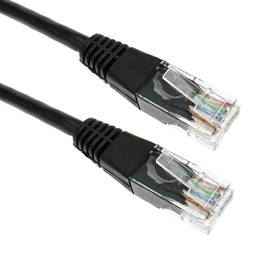
When we talk about RJ45 ("Registered Jack" 45) we refer to a telecommunications network interface for wired connection of voice and data equipment.
This connector has 8 pins or connections and may have a specific category depending on the data transfer speed and bandwidth (category 5e, 6, etc.)
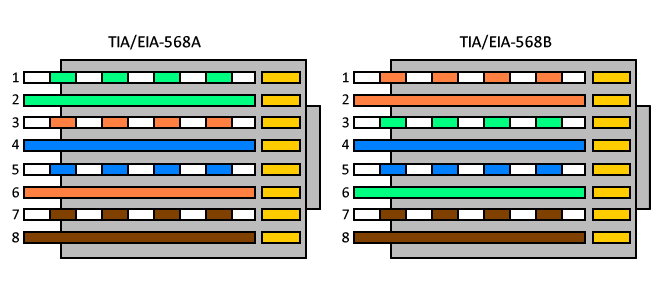
The common application is their use in Ethernet network cables under TIA/EIA-568-B standard that defines the arrangement of pins (pinout), but can also be used for other applications.
- Direct pin diagram:
EIA-568A
Pin No.1: WHITE-GREEN
Pin No.2: GREEN
Pin No.3: WHITE-ORANGE
Pin No.4: BLUE
Pin No.5: WHITE-BLUE
Pin No.6: ORANGE
Pin No.7: WHITE-BROWN
Pin No.8: BROWN
EIA-568B
Pin No.1: WHITE-ORANGE
Pin No.2: ORANGE
Pin No.3: WHITE-GREEN
Pin No.4: BLUE
Pin No.5: WHITE-BLUE
Pin No.6: GREEN
Pin No.7: WHITE-BROWN
Pin No.8: BROWN
- Schematic of crossed pins:
The crossover cable has one end with EIA-568A scheme and the other one with EIA-568B.
Categories network cables
Depending on the quality and type, network cables are classified into categories that help us know the characteristics of them.
The categories of network cables most commonly used are:
- Category 5
- Category 5e
- Category 6
- Category 6
- Category 7
As can be seen, category 5e (enhanced or improved) and category 6A (Augmented), are an improvement of categories 5and 6, respectively, which it has improved the top speed and bandwidth.
The higher the category, the higher the speed of maximum data, the maximum 100 meters distance as its standard.
You can see a table which shows the 5 categories, where V is the maximum velocity, D is the maximum and MHz frequency which can work away.