

10/12/2026 3:09 a.m.
https://cablematic.com/en/products/hygrometer-pce-ht-112-PC536/
https://cablematic.com/en/products/hygrometer-pce-ht-112-PC536/
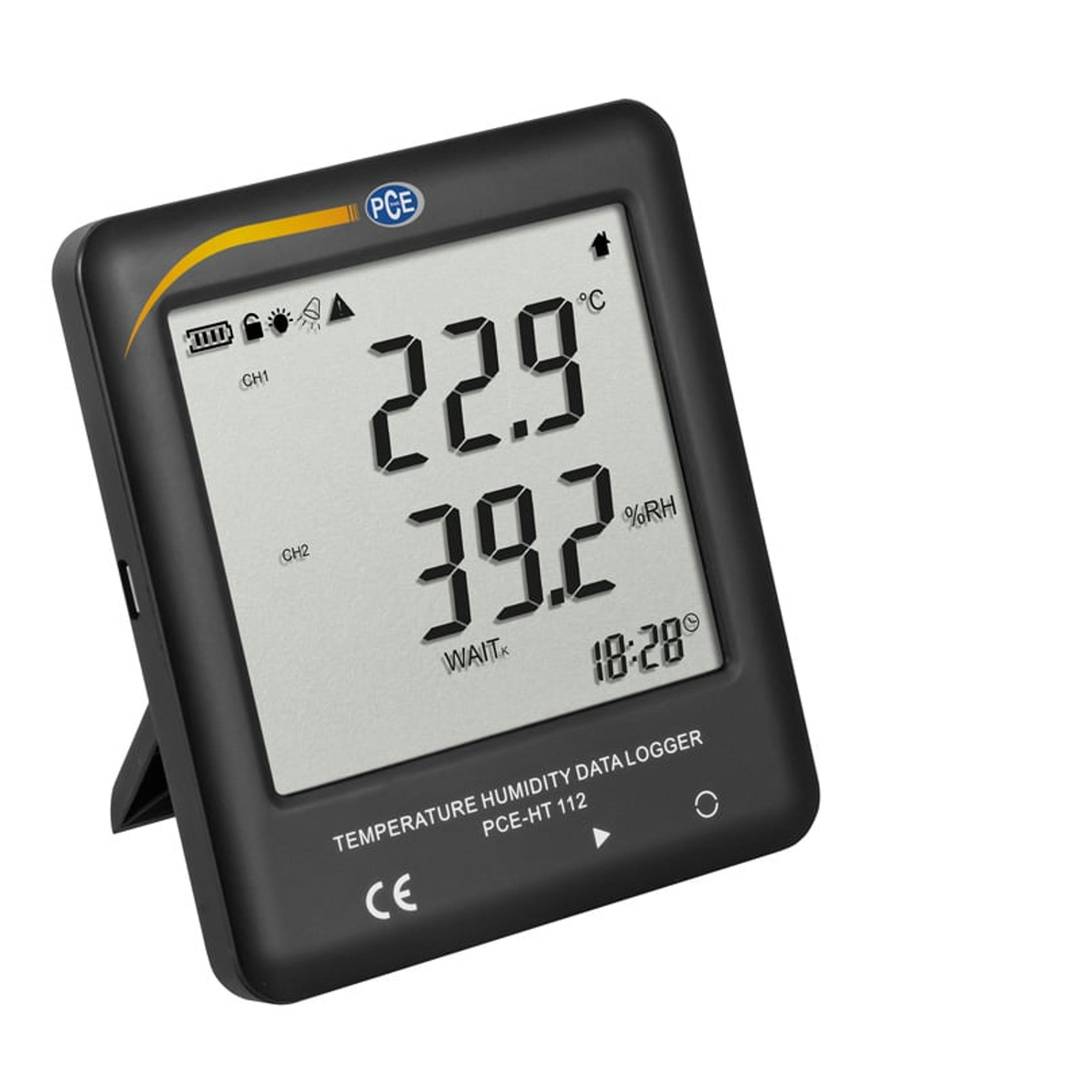


Hygrometer PCE-HT 112
Hygrometer PCE-HT 112
REF: PC536


Specifications
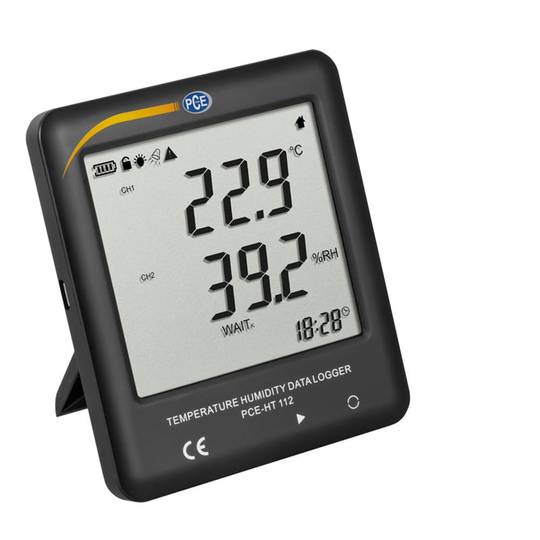
- LCD screen to show the values.
- Internal memory to store up to 25,920 values.
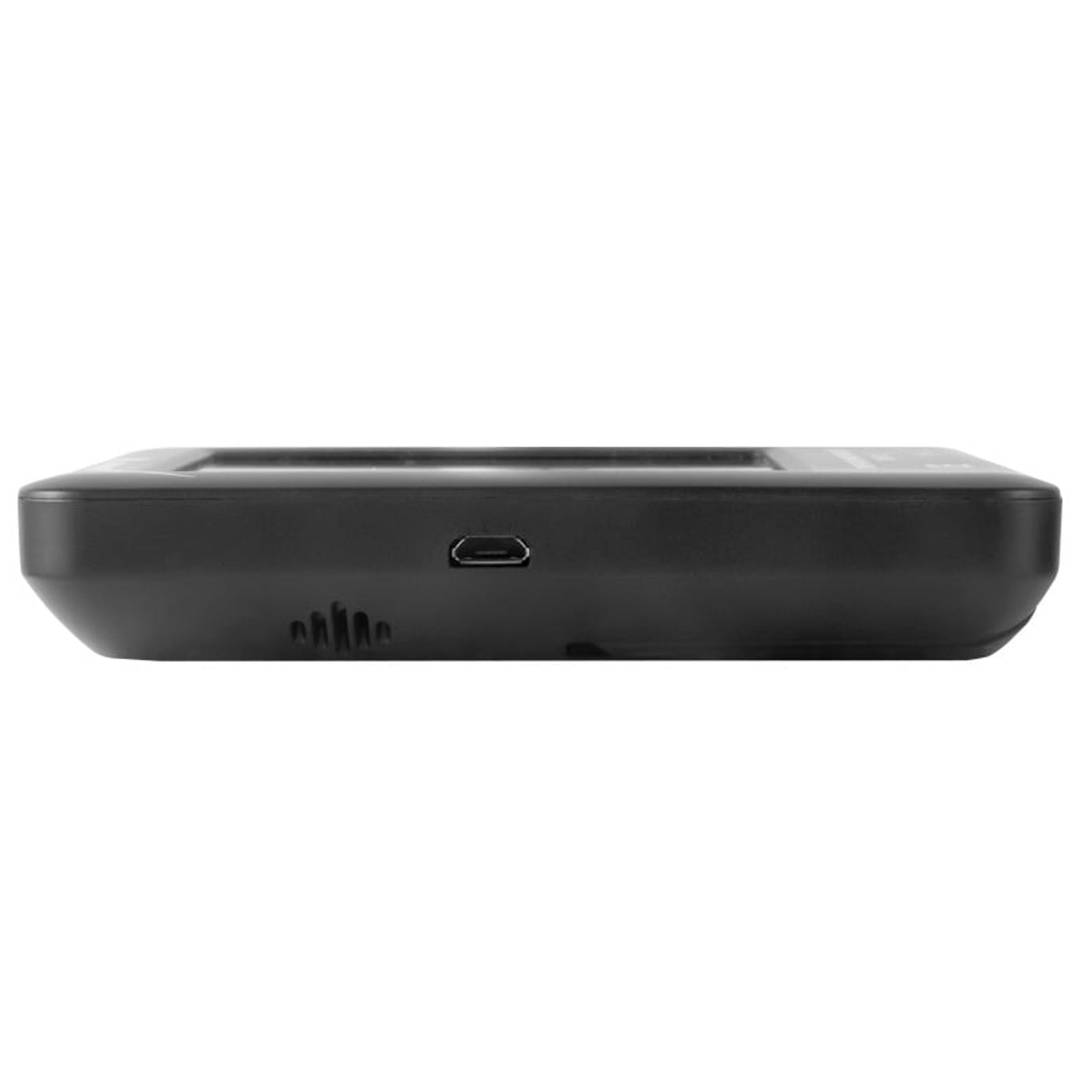
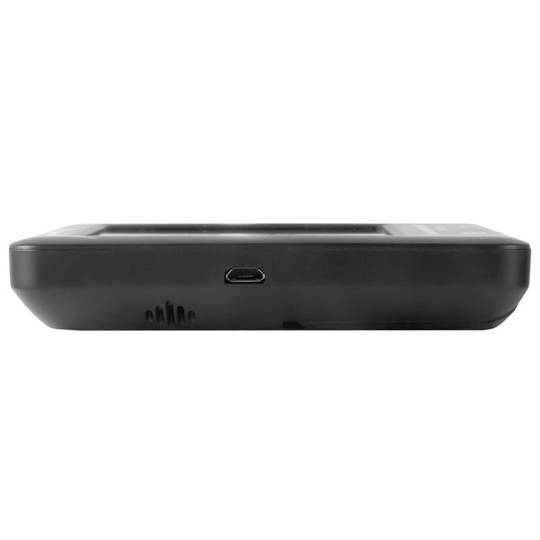
- USB connection to download the data.
- Possibility to adjust alarm limit values.
- Ideal for temperature and humidity control indoors, in laboratories, in refrigerators and incubators.
PVP
€114.89
Price including VAT:
€114.89
PVD
€106.97
PVP: Retail price.
Check conditions.
PVP: Sale price to distributors.
Check conditions.
 2 years
warranty
 14 days
returns
 100%
100%safe
Specifications
- LCD screen to show the values.
- Internal memory to store up to 25,920 values.
- USB connection to download the data.
- Possibility to adjust alarm limit values.
- Ideal for temperature and humidity control indoors, in laboratories, in refrigerators and incubators.
Related products
Keywords
Did not find what you were looking for? These topic could help you
More info
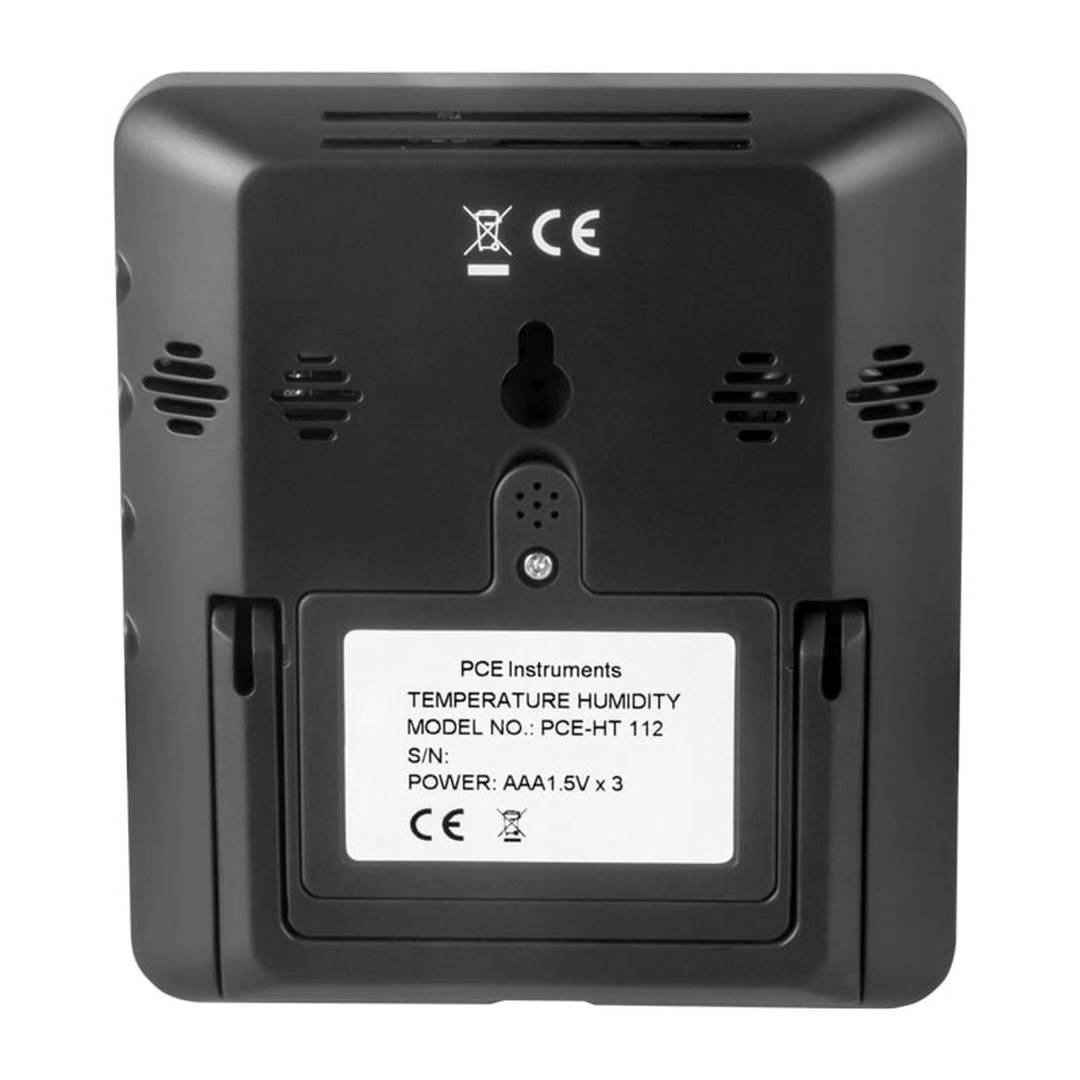
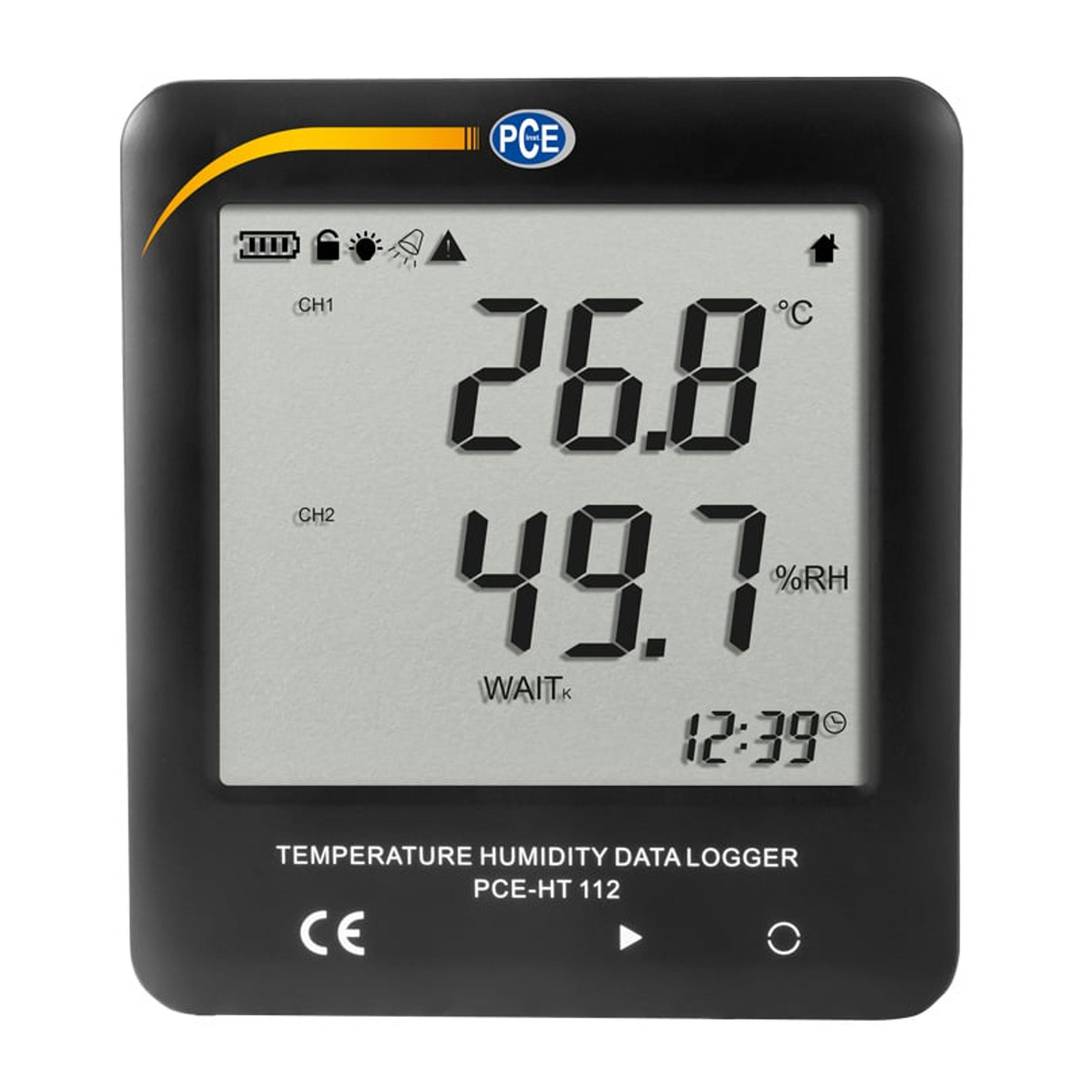
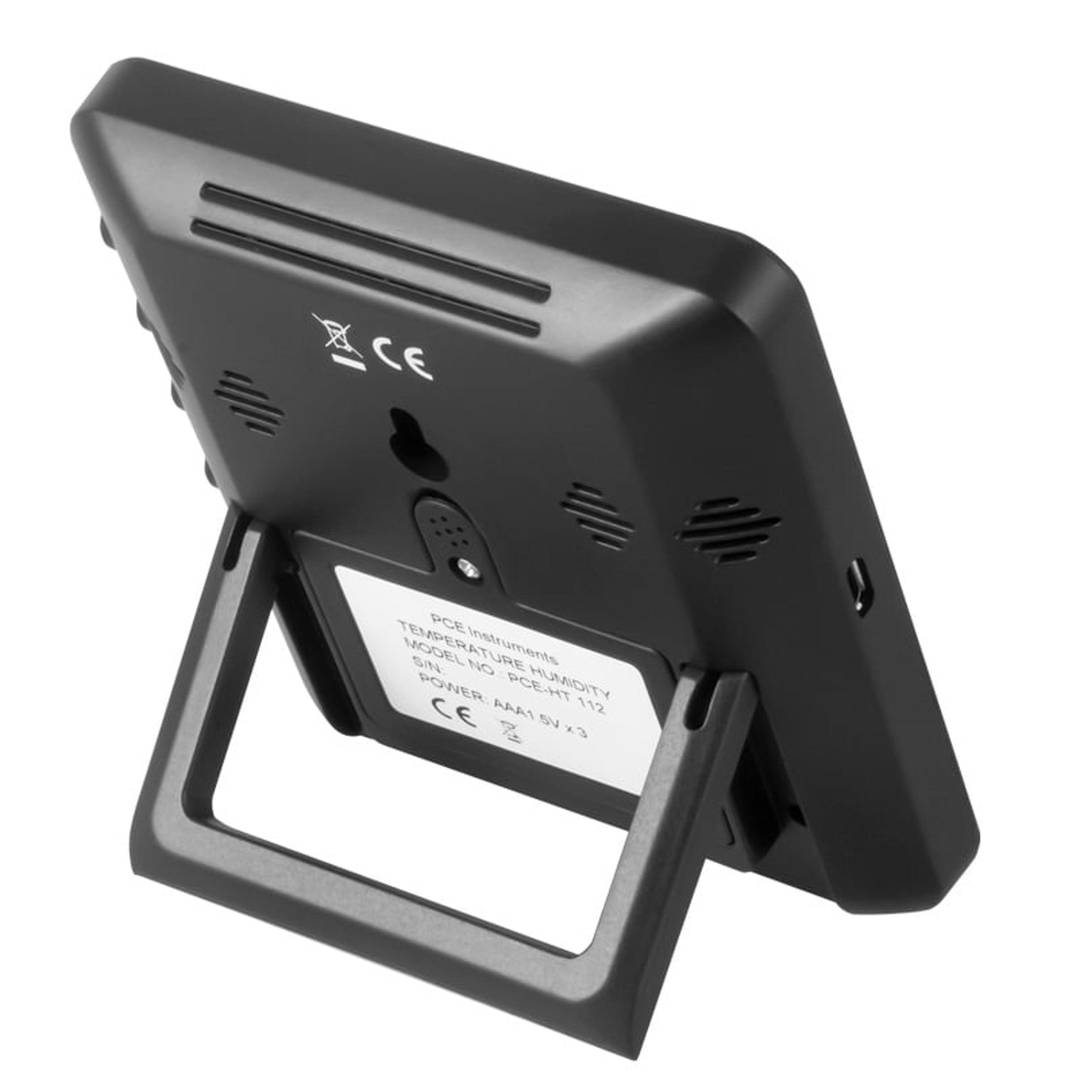
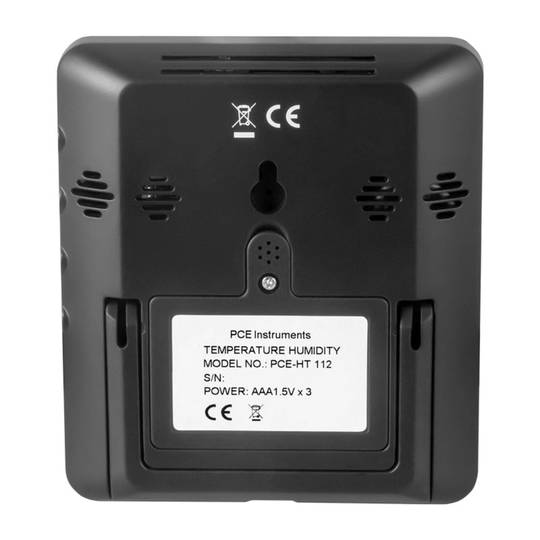
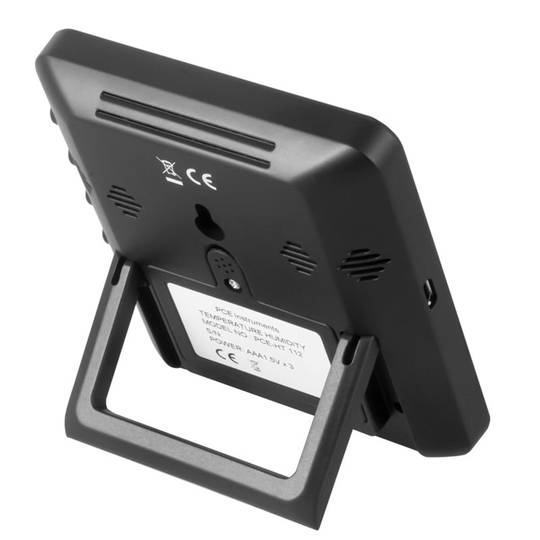
The hygrometer is the ideal solution for those who need to measure indoor temperature and humidity. Its compact, lightweight and ergonomic design makes it easy to use. The built-in LCD screen displays the temperature and humidity values in real time. The device can store up to 25,920 measurement values and quickly download them to a computer via the USB interface. The user can also set the alarm limit values for high and low temperatures. It has a support foot to place it and a fixing tab to hold it in place. The screen can be turned off to save power. The software provides a report with detailed graphs showing the measurement processes, and these reports can be exported in pdf format. Manufactured by PCE, with reference PCE-HT 112.
Specifications
- LCD screen to show the values.
- Internal memory to store up to 25,920 values.
- USB connection to download the data.
- Possibility to adjust alarm limit values.
- Ideal for temperature and humidity control indoors, in laboratories, in refrigerators and incubators.
- Possibility to change the measurement to the optional external sensor.
- Generates a document in pdf format with graphs and values.
- Support foot and fixing tab on the back.
- Possibility of turning off the screen to extend the life of the batteries.
- Gross Weight: 277 g
- Number of packages: 1
Technical terms
- USB
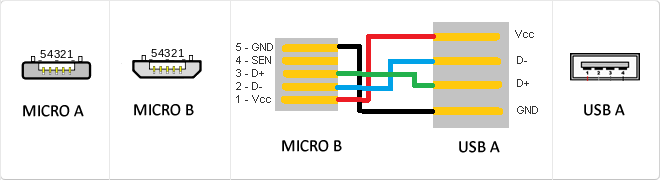
- MicroUSB
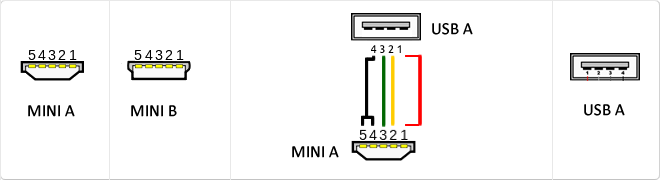
- Mini USB
- USB 3.0
- Hygrometer
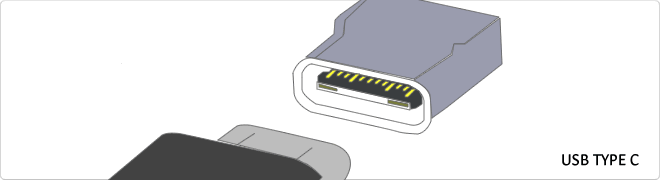
- Reversible USB Type-C
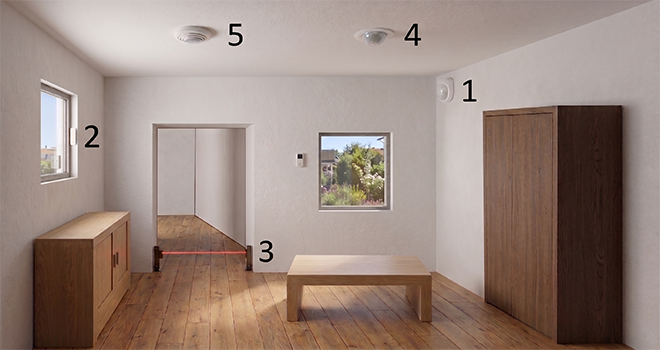
- Movement detector
USB
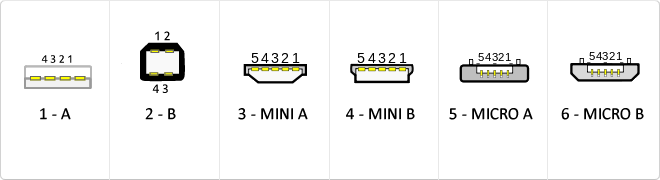
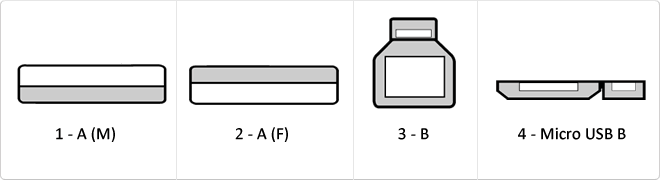
The USB (Universal Serial Bus) is a standard that defines the cables, connectors and used a bus to connect, communicate, computers, peripherals and electronic devices protocols Transmission Rates Low speed (USB 1.0). Transfer rate up to 1.5 Mbit/s (188 kB/s) used in keyboard, mouse ... transfer rate up to 12 Mbit/s (1.5 MB/s) High Speed ??(USB 2.0): Rate transferencia up to 480 Mbit/s (60 MB/s) SuperSpeed ??(USB 3.0) transfer rate up to 4.8 Gbit/s (600 MB/s) Connector Types 1 - USB type A (4 pin) 2. - USB type B (4 pin) 3 - Mini A (5-pin) 4 - Mini B (5-pin) 5 - Micro A (5-pin) 6 - Micro B (5-pin)